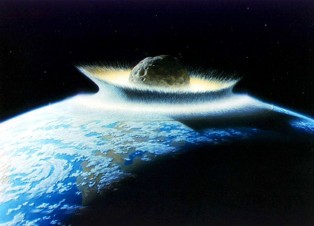


PARIS: Earlier this spring, as violence and chaos drove thousands of refugees onto rickety boats off Libya, with some drowning on the grueling voyage to Italy, scientists gathered on the outskirts of Rome to discuss another sort of catastrophe. Astronomers and physicists from some of the world’s top institutions grappled with a dire scenario: An asteroid possibly as large as 1,300 feet in diameter—big enough to cause epochal damage—was hurtling toward Earth, and the countries likely to be hit included some of the poorest and most unstable in the world. Policymakers bickered over whether to try to blow it up or move it, and nations nearly went to war over whether deflecting it would make the fiery rock more likely to land on them.
Relax. It was only a drill. Had it been a real emergency, you would have been instructed to kiss the world or a large chunk of it goodbye.
Watching this five-day asteroid war game from the wings were two Americans, one from the scientific world and one from the military. These elder statesmen of what’s called planetary defense have been responsible for reminding policymakers that the planet and all life on it have been shaped by big rocks from outer space slamming into it. Dave Morrison was one of the first researchers to suggest that, unlike the dinosaurs made extinct by an asteroid impact, we might be able to defend ourselves. Former U.S. Air Force Lieutenant Colonel Lindley Johnson was eventually put in charge of NASA’s Near-Earth Object (NEO) Program division after first suggesting in the 1990s that the Air Force track asteroids. These men, along with all the dedicated planetary defenders around the world, are proud (and relieved) that the Big Question has evolved from what if a cataclysm-inducing space rock is aiming for us—we now know an impact is inevitable—to what will we do about it.

Karachi Port sets 138-year cargo handling record
KARACHI: Pakistan's maritime sector has achieved a major milestone as Karachi Port set a new record in its 138-year history...