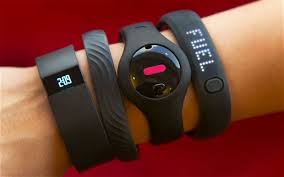
SYDNEY: A year ago, 10 per cent of American adults owned a fitness tracker, according to Pew Research, but the market is growing rapidly. Next week’s release of the Apple Watch is tipped to make wearables mainstream.
It’s axiomatic in the digital world that if an app or service is free, you’re the product. Or your data is. So what to make of consumers who are willing to pay handsomely for the privilege of being spied upon?
You might also like


Wearable fitness devices act like the most intimate of observers, silently tracking users’ heartbeat, logging every step taken, every calorie burned, your hours asleep – and report the data back to their masters. Consumers love them.
It’s ingenious product design, perhaps; and a very Silicon Valley version of win-win. Users get free information about themselves, and in the process generate a brand new category of data that’s extremely valuable to healthcare providers, insurers, employers and marketers.
A year ago, 10 per cent of American adults owned a fitness tracker, according to Pew Research, but the market is growing rapidly. Next week’s release of the Apple Watch is tipped to make wearables mainstream.
Like itbit or Jawbone, the Apple Watch offers measures of your daily activity plus an explosion of new apps that track, manage and report on your health – think step counters, calorie usage and heart rate monitors. Synched with sensors in smartphones and in wearables, apps for Apple and Android devices offer medication reminders, mood loggers, customised goal-setting, fertility cycle tracking, prompts to move after periods of inactivity. Breathalysers, blood glucose monitors and scales that connect to phones via bluetooth are coming to market. Your physical parameters can be quantified like never before.
“Health insurers are all over this”, says Ryan Lin, senior industry analyst at IBISworld. He sees positives for patients, particularly the application of predictive health monitors and panic buttons in aged care, for example. He points out that consumers are willing participants. “It’s the convenience aspect,” he says.
“Health data is the most sensitive of personal information,” says David Vaile, from the Cyberspace Law and Policy Community at UNSW. “Most of these operators are dead keen on avoiding telling you where the data will end up. Anyone expecting protection in the contract or from the regulators is dreaming. The data is going offshore, business value and potential for harm is going offshore, but regulatory and legal protection stops at the border. Am I going to be clueless and expose myself to risks in the future that I can’t even identify now, with people I can’t trust in a jurisdiction I can’t do anything about, with the most sensitive personal information? Why would I do that?”
Most apps state they won’t share your personal information with third parties without your consent. However, buried deep in the fine print, you’ll find this generally means they will sell all your data – just “de-identified” with your name stripped off it. Some don’t even bother to do that. Last year the United States Federal Trade Commission found that of 12 popular free fitness apps, all provided sensitive user information to a total of 76 third parties, including names, email addresses, symptom searches, dietary habits and the location of exercise routes.