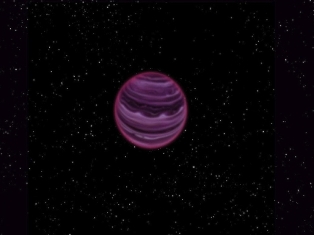
LONDON: A team, led by the University of Edinburgh researchers, used infrared instruments on the European Southern Observatory’s New Technology Telescope in Chile to study the weather systems in the distant world – known as PSO J318.5-22 – which is estimated to be around 20 million years old.
“Temperatures inside clouds on the object exceed 1,470 degrees Fahrenheit (800 degrees Celsius)”, Dr Biller and his colleagues said.


PSO J318.5-22 is a planet drifting through space without a star, and now scientists have discovered it has weird and wonderful weather, too.
Study leader, Dr. Beth Biller, of the University of Edinburgh’s School of Physics and Astronomy, and colleagues believe their findings may improve scientists’ ability to determine whether conditions in distant worlds’ are capable of sustaining life as we know it.
Hundreds of infra-red pictures of the object were taken by the researchers as it rotated over a 5-hour period.
The thick systems of clouds could potentially be similar to Jupiter’s Great Red Spot, meaning that this planet not only has clouds of fiery death, but also massive hurricanes circling its atmosphere. This changed the brightness of the planet-like object as it rotated, according to the researchers. The clouds were made up of hot dust and molten iron.