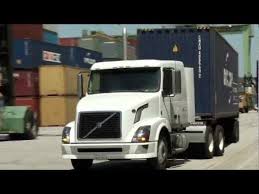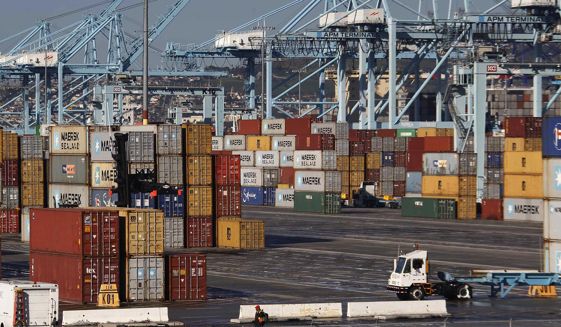
TEXAS: After a serious labor slowdown that cost importers and exporters hundreds of millions of dollars, life is extra busy at the nation’s biggest West Coast ports. Workers are moving a dramatic upsurge in cargo while relieving a backlog of ships stuck waiting, anchored off their shores.
Among others, manufacturers and major retailers said their performance was hampered by slow deliveries in recent months, with Williams-Sonoma (NYSE:WSM) warning of “a more significant impact through the first half of 2015.”
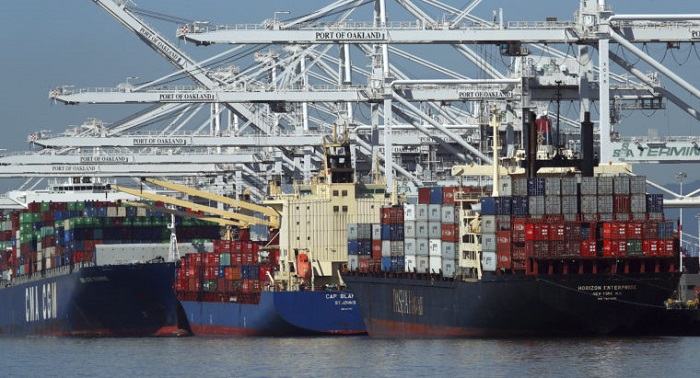

There were only five ships anchored off the ports of Los Angeles and Long Beach, waiting for berths to open up, said Lee Peterson of the Port of Long Beach. At water’s edge, longshoremen and giant cranes were busy loading or unloading 23 berthed container vessels. It may take another month before the pace is back to normal for workers on shore.
Two months ago, dozens of ships waited offshore while dozens of those at dock were idled.
There have been no ships anchored outside the ports of Seattle and Tacoma since March 21, said Peter McGraw at the Port of Seattle. The anchored ship backlog ended on April 2 at the Port of Oakland, said port spokesman Mike Zampa.
The amount of cargo being moved through the nation’s largest port combo spiked in March, with Long Beach reporting a 32% year-over-year increase to 630,084 20-foot equivalent units for the month, while the adjacent Los Angeles cargo rose 17.3% to 800,063 TEUs moved.
Other West Coast ports are peaking too. The Port of Oakland reported 209,407 TEUs moved in March, a 39.4% annual increase. The ports of Seattle and Tacoma saw a 17.6% increase from March 2014 to 361,951 TEUs.
Yet the yearly trend remains negative for Southern California, whose ports handle roughly 40% of U.S. imports. Cumulative volumes from Jan. 1 through March 31 were down 5% from a year earlier at L.A. Harbor and 3.3% lower at Long Beach.
At the docks, in warehouses and transfer lots, cargo is still stacked and backed up by the labor slowdown that resulted while labor leaders, port operators and shippers disputed contract language.
“We’re moving a lot and we need to do that in April to get everything through,” Peterson said, noting that officials are hopeful the cargo backlog will be cleared within the three-month time frame given after the labor dispute was tentatively resolved in February. A final tally of votes from rank-and-file union members is expected by May 22.
Exports are still causing the occasional truck traffic surges at some gates at Seattle-area ports while there are periodic spikes in inbound cargo at Oakland, officials said.
Aside from Williams-Sonoma, retail importers citing the slowdown included Honda Motor (NYSE:HMC), which cut North American production by 5,000 vehicles because parts hadn’t arrived, and Lululemon (NASDAQ:LULU), which last month said a “meaningful portion of inventory” was delayed three weeks by the labor dispute.
At one point, the National Retail Federation warned that a full lockout labor strike would cost the economy $2 billion a day and said West Coast ports accounted for about 12.5% of U.S. gross domestic product.