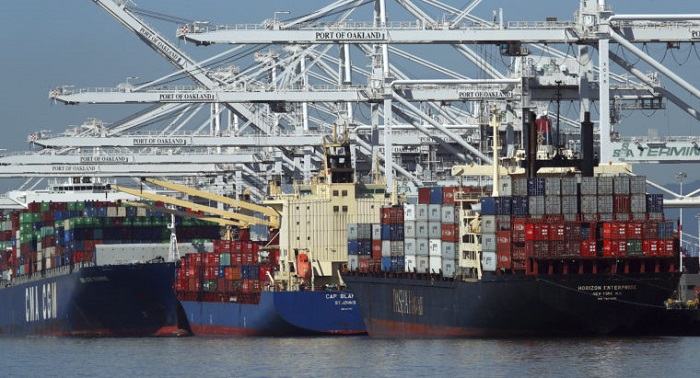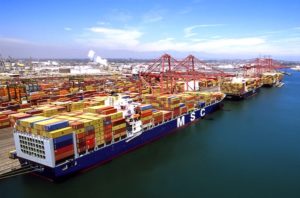
WASHINGTON: Exports and import container traffic was strong, with a leading spot for the Northwest Seaport Alliance. But trouble looms as overall U.S. market share for the West Coast continues to decline. Despite continued sluggish world trade and the bankruptcy of Hanjin Shipping, U.S. West Coast ports saw strong containerized traffic last year, according to the Pacific Merchant Shipping Association (PMSA). The recent PMSA roundup showed that the Northwest Seaport Alliance, comprised of the seaports of the Port of Seattle and the Port of Tacoma, increased its inbound loaded TEUs by 13.5 percent in December and 6.4 percent for the year. TEUs, or twenty-foot equivalent units, are the industry standard measure for shipping containers. Outbound loads from Seattle and Tacoma rose 5.8 percent in December and 12.9 percent for the year. The annual total was the strongest performance by any U.S. port.
The longer picture for U.S. West Coast ports is more sobering, according to a story in the Journal of Commerce. It says, “West Coast ports last year continued a decade-long decline of market share in which they have lost about 12 percentage points of US imports from Asia since 2005, reaching a new low of nearly 67 percent, as beneficial cargo owners increased shipments through the East and Gulf coasts.” The population in the Southeast is growing fast again (at least until climate change kicks in), making eastern and Gulf ports more attractive — and the full effects of the wider Panama Canal didn’t kick in last year. Another big problem is that Vancouver and especially Prince Rupert, B.C., offer attractive alternatives and fast rail connections to the American heartland. U.S. railroads, struggling with the loss of coal and oil traffic, have been increasing intermodal rates. With the new regime in Washington, the state of play may be completely upended. Or not. It’s too early to tell. The Northwest Shipping Alliance has reversed its loss of market share and boasts two natural deep-water ports. On the other hand, it’s in a blue state that may be politically punished.