

Customs Today
  • Home
  • Islamabad
  • Karachi
  • Lahore
  • National
  • Transfers and Postings
  • Chambers & Associations
  • Business
No Result
View All Result
Customs Today
  • Home
  • Islamabad
  • Karachi
  • Lahore
  • National
  • Transfers and Postings
  • Chambers & Associations
  • Business
No Result
View All Result
Customs Today
No Result
View All Result
Home Science & Technology Science

Why dust storms wouldn’t sabotage a real Mars mission

byCustoms Today Report
01/09/2015
in Science, Science & Technology
Share on FacebookShare on Twitter

You might also like

Tesla driverless system to use updated radar technology

12/09/2016

Apple to develop its own self-driving technology

10/09/2016

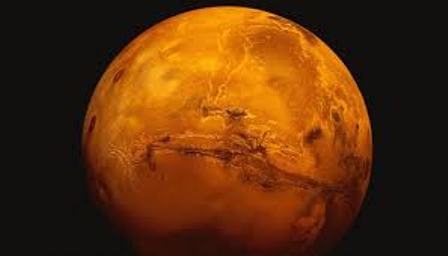
BRENT: Martian dust storms rank among the most impressive in our Solar System. But no matter how menacing they appear from Mars orbit, they’re not likely to cause astronauts to abort future surface missions, says a planetary scientist who studies the phenomena.
Although such storms routinely engulf large swaths of the Red Planet for days at a time, any emergency serious enough to evacuate a crew isn’t likely to be triggered by a dust storm of the sort depicted in the forthcoming film adaptation of Andy Weir’s novel The Martian.
“The idea of Sahara desert-like sandstorms where debris is being thrown around is a Hollywood representation of what Mars is like,” Jim Bell, a science team member for NASA ’s Spirit, Opportunity and Curiosity rovers and a planetary scientist at Arizona State University, told me. “We have no evidence that Mars is really like that.”
On Mars, Bell says, a fast-moving wind can only rarely make a sand grain move, but can easily pick up a dust grain.
The novel depicts such storms as much more destructive, however.
In the aftermath of a once in a century dust storm, the resourcefulness of the novel’s Mark Watney — the stranded NASA astronaut played by Matt Damon in the film, sometimes stretches credulity. Watney finds himself briefly knocked unconscious and injured by flying debris from the mission’s main surface antennas.

Related Stories

Tesla driverless system to use updated radar technology

byCT Report
12/09/2016

WASHINGTON: Electric carmaker Tesla announced Sunday it was upgrading its Autopilot software to use more advanced radar technology. In a...

Apple to develop its own self-driving technology

byCT Report
10/09/2016

SAN FRANCISCO: Apple may not become an automaker, but it still wants to develop its own self-driving technology. The iPhone-maker's...

NASA spots slowest known magnetar

byCT Report
10/09/2016

WASHINGTON: Astronomers have found evidence of a magnetar - magnetised neutron star - that spins much slower than the slowest...

‘YouTubers’ outshining old-school television

byCT Report
09/08/2016

SAN FRANCISCO: A media revolution is taking place, and most people over 35 years of age aren’t tuned in. Millennial...

Next Post

Construction firm WBHO reports 38% drop in yearly profit by projects in Australia

  • Terms and Conditions
  • Disclaimer

© 2011 Customs Today -World's first newspaper on customs. Customs Today.

No Result
View All Result
  • Transfers and Postings
  • Latest News
  • Karachi
  • Islamabad
  • Lahore
  • National
  • Chambers & Associations
  • Business
  • About Us

© 2011 Customs Today -World's first newspaper on customs. Customs Today.