

Customs Today
  • Home
  • Islamabad
  • Karachi
  • Lahore
  • National
  • Transfers and Postings
  • Chambers & Associations
  • Business
No Result
View All Result
Customs Today
  • Home
  • Islamabad
  • Karachi
  • Lahore
  • National
  • Transfers and Postings
  • Chambers & Associations
  • Business
No Result
View All Result
Customs Today
No Result
View All Result
Home Science & Technology Science

Why elephants rarely get cancer despite their large size, scientists disclose

byCustoms Today Report
09/10/2015
in Science, Science & Technology
Share on FacebookShare on Twitter

You might also like

Tesla driverless system to use updated radar technology

12/09/2016

Apple to develop its own self-driving technology

10/09/2016

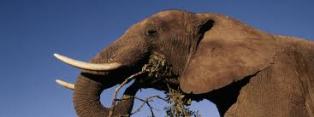
EUROPE: Scientists have unravelled the secret to why elephants rarely get cancer despite their large size.
Elephants have 38 additional modified copies of a gene that encodes p53, a compound that suppresses tumour formation.
Humans, on the other hand, have only two, according to the study in the Journal of the American Medical Association (JAMA).
This means that as elephants evolved, their bodies made many extra copies of a gene that prevents tumours from forming.
Elephants have been considered an enigma for years because they have far more cells than people, which would presumably place them at higher risk of cancer over their lifespans, which can last 50-70 years.
And yet, the analysis of a large database of elephant deaths showed that less than 5 per cent of elephants die of cancer, compared to 11 to 25 per cent in people.
“By all logical reasoning, elephants should be developing a tremendous amount of cancer, and in fact, should be extinct by now due to such a high risk for cancer,” said co-senior author Dr Joshua Schiffman, paediatric oncologist at Huntsman Cancer Institute, University of Utah School of Medicine.
The scientists combed through the African elephant genome and found at least 40 copies of genes that code for p53, a protein well known for its cancer-inhibiting properties.
“We think that making more p53 is nature’s way of keeping this species alive.”
To test their hypothesis, they then compared cells from the elephants with a group of healthy humans, and a group of people who have Li-Fraumeni Syndrome, who have just one copy of p53 and a 90 per cent chance of developing cancer over their lifetime.

Related Stories

Tesla driverless system to use updated radar technology

byCT Report
12/09/2016

WASHINGTON: Electric carmaker Tesla announced Sunday it was upgrading its Autopilot software to use more advanced radar technology. In a...

Apple to develop its own self-driving technology

byCT Report
10/09/2016

SAN FRANCISCO: Apple may not become an automaker, but it still wants to develop its own self-driving technology. The iPhone-maker's...

NASA spots slowest known magnetar

byCT Report
10/09/2016

WASHINGTON: Astronomers have found evidence of a magnetar - magnetised neutron star - that spins much slower than the slowest...

‘YouTubers’ outshining old-school television

byCT Report
09/08/2016

SAN FRANCISCO: A media revolution is taking place, and most people over 35 years of age aren’t tuned in. Millennial...

Next Post

Starafrica Corporation expects to positive impact of new sugar import tax

  • Terms and Conditions
  • Disclaimer

© 2011 Customs Today -World's first newspaper on customs. Customs Today.

No Result
View All Result
  • Transfers and Postings
  • Latest News
  • Karachi
  • Islamabad
  • Lahore
  • National
  • Chambers & Associations
  • Business
  • About Us

© 2011 Customs Today -World's first newspaper on customs. Customs Today.