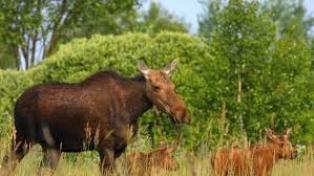


CANADA: Almost 30 years after a horrific accident at the Chernobyl Nuclear Power Plant released massive amounts of radiation and became one of the world’s worst nuclear catastrophes, the long-abandoned site has some new inhabitants: New research finds that many native wildlife species are once again finding refuge in the human-free Chernobyl Exclusion Zone in Ukraine.
Scientists found that the numbers of moose, roe deer, red deer and wild boar living in the Chernobyl Exclusion Zone — a roughly 1,000-square-mile (2,600 square kilometers) designated area of contamination around the disaster site — are similar to the animals’ population numbers in nearby uncontaminated nature reserves. In fact, they noted that wolf census data in the area has a population seven times greater than populations in nearby reserves.
The researchers examined long-term census data compiled from helicopter surveys (from 1987 to 1997) and animal track surveys, in which scientists recorded animal tracks in the region over several years.
In 1986, a reactor at the Chernobyl Nuclear Power Plant exploded, triggering a fire and unleashing clouds of radioactive particles that contaminated the area surrounding the power plant for at least an 18-mile (29 km) radius, according to the World Nuclear Association, an international organization that supports the nuclear energy industry.
Residual radiation from the nuclear meltdown forced a massive human evacuation from the area, but the new findings suggest that some wildlife species have started to call the area home over the past decade.
The researchers suspect that wildlife initially returned to the area because it has been largely undisturbed by humans, which has allowed many species — larger mammals, in particular — to thrive, according to Jim Smith, the study’s observation team coordinator and a professor of environmental science at the University of Portsmouth in the United Kingdom.

Karachi Port sets 138-year cargo handling record
KARACHI: Pakistan's maritime sector has achieved a major milestone as Karachi Port set a new record in its 138-year history...