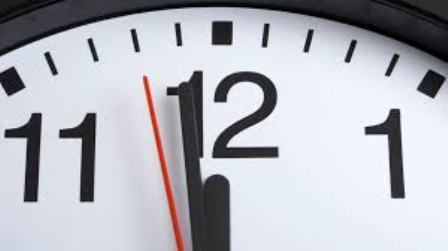


WASHINGTON: Well at 2359 Greenwich Mean Time on June 30, or 9.59am AEST on July 1, the world will experience a minute that will last 61 seconds.
The reason? Something called the leap second. That’s when timekeepers adjust high-precision clocks so they’re in sync with earth’s rotation, which is affected by the gravitational tug of the sun and moon.
Few of the planet’s 7.25 billion people are likely to be aware of the change.
But for horologists, the additional second is a big deal, and there’s a wrangle as to whether it is vital or should be scrapped. The last modification, on June 30, 2012 was disruptive for many internet servers, including Qantas’ online reservation system, which went down for several hours.
The leap second is not something that needs to be added to the clock on your mantelpiece.
Instead, its importance is for super-duper timepieces, especially those using the frequency of atoms as their tick-tock mechanism.
At the top of the atomic clock range are “optical lattices” using strontium atoms, the latest example of which, unveiled in April, is accurate to 15 billion years — longer than the universe has existed.
Outside the lab, caesium and rubidium clocks are the workhorses of Global Positioning System satellites, which have to send synchronised signals so that sat-nav receivers can triangulate their position on earth.

Karachi Port sets 138-year cargo handling record
KARACHI: Pakistan's maritime sector has achieved a major milestone as Karachi Port set a new record in its 138-year history...