Customs Today
  • Home
  • Islamabad
  • Karachi
  • Lahore
  • National
  • Transfers and Postings
  • Chambers & Associations
  • Business
No Result
View All Result
Customs Today
  • Home
  • Islamabad
  • Karachi
  • Lahore
  • National
  • Transfers and Postings
  • Chambers & Associations
  • Business
No Result
View All Result
Customs Today
No Result
View All Result
Home Science & Technology Science

World’s most powerful telescope stands 3 miles above sea

byCustoms Today Report
25/07/2015
in Science, Science & Technology
Share on FacebookShare on Twitter

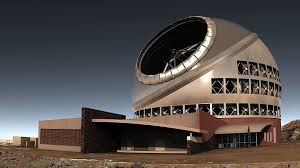
CHILE: Three miles above the sea, in the driest desert on earth, stands the world’s most powerful telescope.

Like an eye the size of Manhattan Island, it is able to peer into the furthest corners of the universe, detecting new-born planets as they emerge from gaseous cocoons and mysterious black holes that swallow stars.


You might also like

Tesla driverless system to use updated radar technology

12/09/2016

Apple to develop its own self-driving technology

10/09/2016

In the sun-scorched region of Antofagasta in northern Chile, the Atacama Large Millimeter Array, or ALMA as the observatory is more commonly known, has had its breakthrough of the year.

Its super-strength antennas, which collectively map distant parts of the universe, have detected the molecules that gave rise to life on earth floating in a dust cloud around a distant solar system.

Known as “methyl cyanide,” the molecules found by a team of Harvard astronomers contain the vital nitrogen atom that enables organic molecules like sugars to transform into amino acids — the strands of protein in which human DNA is encoded.

Seen as the raw ingredients for life, the finding not only indicates that other parts of the universe may be fertile plains in which life may flourish, but demonstrates the vast leaps in human knowledge made possible through scientific collaboration. Just a few years ago, such a discovery would have been impossible.

“We are collecting information now in a way that wasn’t possible before,” Giorgio Siringo, an Italian scientist who works at ALMA’s base camp, told the Miami Herald.

“Science projects that would have needed years of time to be done using other radio telescopes can now be done in a few hours at ALMA.”


 

Related Stories

Tesla driverless system to use updated radar technology

byCT Report
12/09/2016

WASHINGTON: Electric carmaker Tesla announced Sunday it was upgrading its Autopilot software to use more advanced radar technology. In a...

Apple to develop its own self-driving technology

byCT Report
10/09/2016

SAN FRANCISCO: Apple may not become an automaker, but it still wants to develop its own self-driving technology. The iPhone-maker's...

NASA spots slowest known magnetar

byCT Report
10/09/2016

WASHINGTON: Astronomers have found evidence of a magnetar - magnetised neutron star - that spins much slower than the slowest...

‘YouTubers’ outshining old-school television

byCT Report
09/08/2016

SAN FRANCISCO: A media revolution is taking place, and most people over 35 years of age aren’t tuned in. Millennial...

Next Post

Mentha oil prices rise 0.7% to Rs 930.40kg in early trade

  • Terms and Conditions
  • Disclaimer

© 2011 Customs Today -World's first newspaper on customs. Customs Today.

No Result
View All Result
  • Transfers and Postings
  • Latest News
  • Karachi
  • Islamabad
  • Lahore
  • National
  • Chambers & Associations
  • Business
  • About Us

© 2011 Customs Today -World's first newspaper on customs. Customs Today.