BEIJING: Far from deterring outbound Chinese property investment, leading international realty professionals expect the yuan’s depreciation to actually increase industry activity.
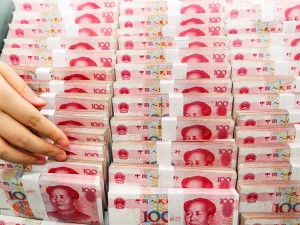
Since August 11, when the People’s Bank of China surprised the world by lowering the yuan’s reference rate, the currency has declined by 3.3 percent against the US dollar before it rose a little in the past few days.


Steven McCord, the head of research in China for global commercial real estate firm JLL, said in theory that would make dollar-denominated assets more expensive for Chinese investors, dampening their enthusiasm.
But in practice, McCord, from the company previously called Jones Lang LaSalle, expects his investor clients to see the depreciation as putting more emphasis on diversifying their assets globally, to hedge currency risks.
“Housing in foreign countries may be slightly more expensive. But homebuyers who were contemplating an overseas purchase, now have even more reason to do so, to diversify their holdings,” said McCord.
“We expect to see rising interest in outbound residential investment not only in a search for returns or rental yield, but also as a wealth-preservation tool.”
Officials at CBRE Group Inc, the United States commercial real estate company, have also said in a report that the size of the savings pool in China and the imperative for Chinese institutions to build up more diversified portfolios are “too great” for any depreciation of the yuan to affect the flow of capital, even if it reaches up to 8 percent.
Gregory Wells, head of Asia at Forum Partners, a global real estate investment and asset management company, said he firmly believes the depreciation was a “one-off occurrence”, while China’s desire for diversification out of the country is certainly not.
“We see no reason to expect any decline in offshore acquisitions by Chinese investors. If anything we expect their robust growth to continue.
“The destination countries haven’t really changed – the United Kingdom, Canada, the United States and Australia – but Chinese investors are now more willing to invest outside of international gateway cities, such as Chicago and Melbourne,” said Wells.
CBRE estimates suggest outbound Chinese real-estate investment was worth $6.6 billion in the first half of 2015, taking up 35 percent of Asia’s investment.
Cushman & Wakefield, which this week announced the completion of its merger with realty rival DTZ, estimates there was $9.44 billion of Chinese investment globally in office buildings, shopping malls, and other commercial properties in the first five months, a 92 percent surge from the previous year.
JLL’s McCord said in terms of foreign investors buying commercial property in China, most analysts think the currency depreciation by itself will not undercut the already tepid commercial property investment sentiment.
He said the previous decade-long rise in the value of the yuan was an “icing on the cake” for foreign inbound investors. The disappearance of the “icing”, he insisted, will not make the situation worse.
“Before the depreciation, FDI in real estate was already dampened by high prices, and a weakening growth outlook,” he said.
“The recent move adds to this by making investors question future assumptions about cash flows on their China investments when converted into their home currency. This makes inbound investment worthy of a careful pause.”
In a statement, the London-based Savills Plc said: “For international institutions, a slowing Chinese economy has already deterred many opportunistic investors, while those that remain are more focused on core projects.
“The short-term depreciation of the yuan is unlikely to deter these investors, who are focused on the bigger picture, and have broader horizons than China.”