HARARE: The country’s business chamber has expressed concern over the country’s widening budget deficit and said government borrowings from the local market will weaken an already stuttering economy.
Finance minister Patrick Chinamasa last month lowered revenue projections in the wake of company closures and job layoffs triggered by the lowest economic activity in five years, with revenue now seen at $3,6 billion from $3,99 billion while expenditure has been reduced to $4 billion from $4,11 billion.


This leaves a budget deficit of $400 million which government has said it will finance from local and foreign sources.
The administration has primarily used Treasury Bills to raise funds on the local market but the Zimbabwe National Chamber of Commerce (ZNCC) wants the state to rein in spending, saying the growing budget deficit was a sitting time bomb if it remains unchecked.
Zimbabwe, which relies entirely on tax collections, raised $1,66 billion in the first six months of the year while government expenditures stood at $2,118 billion and revised economic growth for the year to 1,5 percent from the initial 3,2 percent.
“We are worrying on how this budget deficit will be financed,” said ZNCC in a statement on Thursday.
“If the government is to borrow to plug this gap, at what cost to the fiscus is it going to secure the funds or what return to the shareholders if banks are funding the gap.
“Generally speaking, Treasury Bills are averaging two percent per annum (in interest rates) and are certainly not a funding mechanism to talk about.
“This compels us to push for the urgent restructuring of parastatals as the opportunity cost of missing revenue from government enterprises is becoming much more felt as we move into the distant from the time we officially dollarised.”
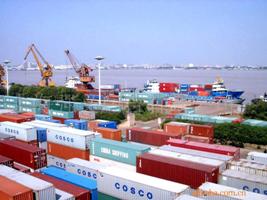
The chamber also noted the increasing trade deficit which it said meant the country had no capacity to grow.
“A negative balance of payment also poses a threat to any possibility of returning to our own local currency,” said ZNCC.
“When the trade deficit widens, it implies the economy will find it difficult to sustain its own currency regime. Though exports grew by a mere 0,4 percent to $1,3 billion, imports spiked up by two percent to $3,1 billion.”
Analysts say such structural deformities in the economy will not go away overnight without radical policy measures to redress the current deindustrialisation, adding that government needed to avoid debt build-up.
ZNCC also raised concern over the blanket ban of second hand clothes, which it says will have an adverse impact on the poor and unemployed who can’t afford to purchase new clothes in the formal sector.
The high cost of borrowing — where rates can be as high as 20 percent per annum — was delaying the recovery of the manufacturing sector.
“We compel the government to expedite the process of negotiating cheaper lines of credit and embracing the value chain systems by not funding hopeless companies which can only be a drain to the fiscus,” said ZNCC.