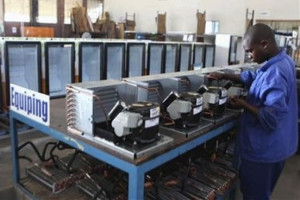
HARARE: Zimbabwe’s has a highly diversified industrial base and the broadly-based manufacturing sector produces in excess of 6 000 products or commodities ranging from food and clothing to fertilisers and chemicals, metal products of all kinds, electrical machinery and equipment and motor vehicle assembly.
Below are some of the highlights of 2015. Manufacturing capacity utilisation slips to 34,3% Capacity utilisation in the manufacturing sector declined to 34,3% in 2015 attributed to capital constraints and antiquated machinery.


According to a Confederation of Zimbabwe Industries (CZI) report, the constraining factors—such as low local demand, high cost of doing business, competition from imports, capital constraints and antiquated machinery—remained the same. Last year capacity utilisation was at 36,5%.
According to the CZI report, Zambia remained the top destination for Zimbabwean goods followed by South Africa, Malawi and Mozambique. It said the reason why companies were not exporting was lack of export incentives, high cost of doing business, limited capacity and the costs associated with exporting.
The South African rand fell drastically against the US dollar breaching the 16-point mark, putting pressure on the country’s exports. It was made worse by the fact that other regional currencies were weakening and this made Zimbabwean exports expensive. Imports on the other hand became cheap putting, pressure on local products.
Zimbabwe suffered from high production costs throughout the year making local products uncompetitive. There is an aggressive push for fiscal and internal devaluation to increase the export competitiveness. This comes on the back of monetary authorities’ inability to tweak the exchange rate to improve export competitiveness.
The country had to endure power outages beginning August due to low water levels at Kariba Dam which led to reduced generation of electricity. To show that government was not serious in addressing the crisis, Energy and Power Development minister Samuel Undenge said he had a solution: Companies should import their own power.
Undenge’s advice came after Mines and Mining Development minister Walter Chidhakwa had told miners to build their own power stations.
In July, government announced a ban of second-hand clothes to protect the local industry. The ban was effective August 1. The ban created uproar on vendors who argued that selling second-hand clothes was their source of livelihood. Curiously though, government did not gazette a statutory instrument enforcing the ban.
Government engaged French company Bureau Veritas to offer conformity services for the next four years saying it was an interim measure of addressing the sub-standard imports whilst the establishment of the Zimbabwe Quality Standards Regulatory Authority was being finalised.
Bureau Veritas will provide verification of conformity services of listed products in the country of export and issue a certificate of conformity based on national and international quality, safety, health, and environment standards.
Agro processor Cairns exited judicial management last month after the acquisition of 90% shareholding by investment holding firm Takura Capital. Takura Capital was selected as the winning suitor in May. In July, Cairns shareholders and creditors voted for the takeover of the company by Takura Capital.
Cairns Holdings was placed under provisional judicial management in 2012 and final judicial management in February 2013, due to insolvency. It delisted from the Zimbabwe Stock Exchange in 2013.
Blue Ribbon Industries (BRI) creditors approved the takeover of the company by a Tanzanian industrial conglomerate, Bakhresa Group, a move which is expected to revive the food processor.
Bakhresa Group would bring in $18,3 million upfront and $40 million would be injected over five years. Bakhresa will take over BRI and its subsidiaries and has the capacity to recapitalise and revive the company. Bakhresa has operations in Kenya, Rwanda, Burundi, Malawi, Mozambique and South Africa and has created over 10 000 jobs.
In June French company, Lesaffre, acquired a 60% stake in Anchor Yeast (Private) Limited in a deal worth $11,5 million. The company was renamed Lesaffre Zimbabwe. Before the deal, Anchor Yeast (Private) Limited was a subsidiary of Anchor Holdings Private Limited, a family-owned diversified investment holding company.