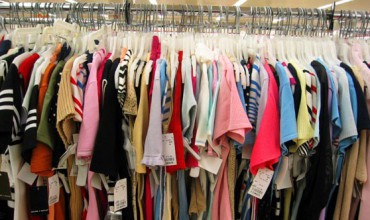
HARARE: The Zimbabwe Textile Manufacturers’ Association (ZITMA) says the ban on second-hand clothes will see the sector doubling its contribution to Gross Domestic Product (GDP) to 10%.
Before the ban, the sector was contributing about 5% to GDP. ZITMA secretary-general Raymond Huni yesterday told NewsDay that the sale of secondhand clothes was keeping the textile industry at 30% capacity.


“Hopefully, by next year we will see significant changes. At the current moment, the textile industry has been operating at 30% capacity as secondhand clothes have had a negative impact. At full capacity, the textile industry is expected to contribute 10% to the total GDP,” Huni said.
“As manufacturers, we supply fabrics to clothing stores who then sell the finished goods to the public. If their sales are down so our industry gets affected.” The impact of secondhand goods has seen ZITMA campaigning for the law enforcement agents to enforce the ban on traders and allow the industry to operate at more competitive levels.
Since the effecting of the ban as of September 1, Huni said if the sales of the secondhand clothes had continued the whole industry would have collapsed. “The only people who are still selling secondhand clothes are those who bought them prior to the ban,” Huni said.
In his mid-term fiscal policy review, Finance minister Patrick Chinamasa imposed a ban on secondhand clothes to bolster the local textile industry which he said was a “low hanging fruit”.
The textile industry has the potential to adequately supply cotton and cotton-blended fabrics to the local market. However, the local industry has remained relatively uncompetitive mainly due to high costs of production, obsolete equipment, lack of access to cheap finance and competition from imported products. Chinamasa introduced the manufacturers’ rebate of duty on critical inputs imported by approved textile manufacturers.
This rebate will cover spare parts, yarn and unbleached fabric, among others. Furthermore, it was proposed to remove blankets from the Open General Import Licence for a period of 24 months.
Polyknitted fabric is currently imported in semi-processed form, hence undergoes very limited local value addition before transformation into a blanket, which competes with locally manufactured blankets.
To that effect, government will increase customs duty on polyknitted fabric from 10% to 40% plus US$2,50 per kg. However, as mentioned by Huni, many traders are yet to fully comply with the ban on selling secondhand clothes on the local market.