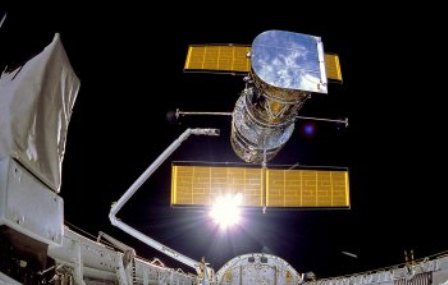
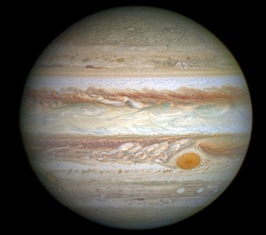
NEW YORK: The Hubble space telescope will have its 25th birthday in the next month. It served for years to discover the new horizons of the world. We can see the unbelievable destinations, colour and grandeur of the universe: newborn stars glittering through thick columns of interstellar dust, or luminous galaxies whose light has taken billions of years to reach us.
These visions excite contradictory responses. There is a sense of empowerment in knowing our species is capable of revealing the wonders of the universe in such an effective way. Humanity has clearly come a long way in running such a complex machine so far from home. On the other hand, these images of incredibly remote galaxies, each filled with billions of stars like our own sun, are as effective a demonstration of human insignificance as you could get. We are the denizens of a small planet “in the uncharted backwaters of the unfashionable end of the western spiral arm of the galaxy”, as Douglas Adams once put it. The Hubble has made this abundantly clear, albeit in glorious, rich hues.
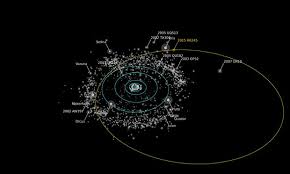
Astronomers discover distant dwarf planet beyond Neptune
LONDON: A dwarf planet half the size of Britain has been found tumbling through space in the most distant reaches...