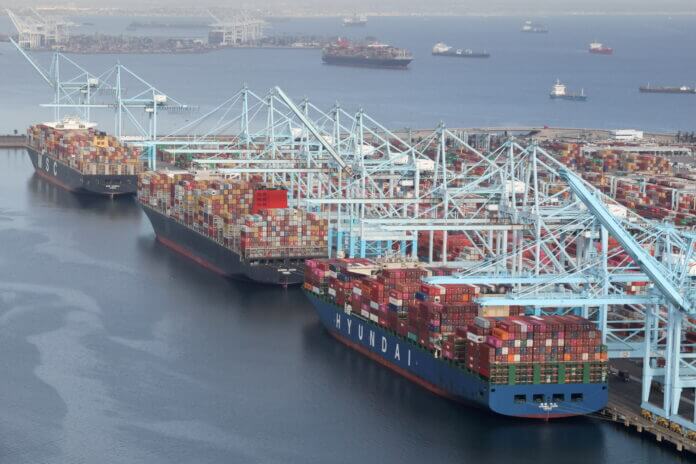
KARACHI: Around 3,000 containers destined for Iran remain stranded at Karachi port as vessels scheduled to collect them have failed to arrive amid escalating tensions in the Strait of Hormuz, reported by Al Jazeera.
The disruption follows restrictions on maritime movement linked to the ongoing conflict involving the United States and Iran, with uncertainty over when shipping routes will stabilise. Analysts say the pressure is part of a broader strategy aimed at controlling trade flows rather than fully halting them.


Since early March, Iran has imposed a system to regulate vessel access through the strait, while the United States has enforced measures that have limited shipping linked to Iranian ports. These developments have affected both exports and imports, tightening supply chains.
Shipping through the strait continues selectively, with some vessels allowed passage under specific conditions, including prior clearance and documentation. In certain cases, payments have reportedly been made outside the dollar system, including in yuan and cryptocurrencies, while some ships remain blocked entirely.
Rising costs have added to the disruption. Industry representatives say war-risk insurance premiums have surged sharply, increasing the cost of transit and discouraging container shipments, where margins are lower and timelines are fixed.
Pakistan and Iran are now exploring alternative logistics options to move the stranded cargo. Officials from both sides have discussed a potential land corridor across the roughly 900-kilometre border, with Pakistani trucks transporting goods to the frontier before handover to Iranian carriers.
Documents reviewed by stakeholders indicate Iran may offer additional payments to transporters to facilitate deliveries through inland routes, despite higher costs and slower timelines compared to maritime shipping.
The Strait of Hormuz remains operational but constrained, with access determined by political alignment and compliance requirements. While oil shipments continue in limited volumes due to higher margins, containerised trade has faced greater disruption.
Analysts say prolonged restrictions could strain regional trade flows and increase pressure on economies dependent on maritime routes, particularly where imports of essential goods remain critical.