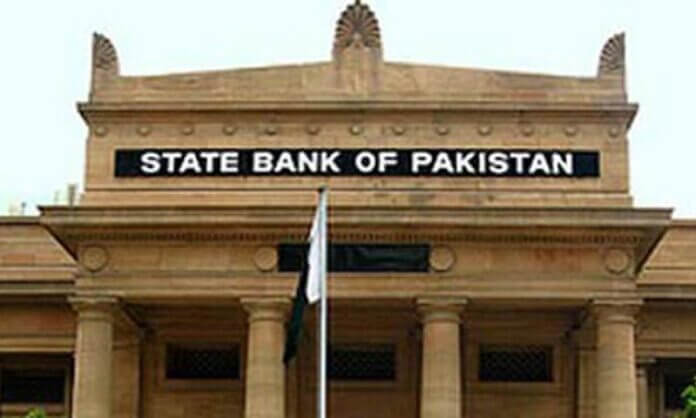
KARACHI: The State Bank of Pakistan has projected Pakistan’s economic growth for fiscal year 2025-26 in the range of 3.75 percent to 4.75 percent, exceeding the government’s official target of 4.2 percent despite growing risks from the ongoing Middle East war.
In its Half Year Report on the State of Pakistan’s Economy for FY26, the central bank said the country’s macroeconomic outlook improved during the first half of the fiscal year, supported by prudent monetary and fiscal policies, easing inflation, stronger remittance inflows, and improving industrial activity.


The SBP projected average Consumer Price Index (CPI) inflation in the range of 5 percent to 7 percent for FY26, remaining below the government target of 7.5 percent.
However, the central bank warned that rising global oil prices due to geopolitical tensions could keep inflationary pressures elevated in the coming months.
According to the report, workers’ remittances are expected to reach $42 billion during FY26, surpassing the official target of $39.4 billion. The current account deficit is also likely to remain close to the lower bound of the projected range of 0 to 1 percent of GDP due to strong remittance inflows.
However, the SBP projected the fiscal deficit to widen to as much as 4.5 percent of GDP against the government’s target of 3.9 percent, mainly due to higher energy subsidies, increased import costs, and rising discretionary spending following the surge in international oil prices.
Middle East war threatens economic outlook
The central bank cautioned that the ongoing Middle East conflict poses significant risks to Pakistan’s economic stability through rising energy prices, supply chain disruptions, increased freight charges, and higher insurance premiums.
The report noted that the spike in international oil prices has already started transmitting into domestic inflation, although the government initially absorbed a large portion of the increase. The SBP warned that persistent oil price shocks could create second-round inflationary effects and increase core inflation through rising production and transportation costs.
“Supply chain disruptions, especially the import of critical raw materials and machinery, could affect industrial production as well as exports,” the report stated.
The central bank further warned that slower economic activity in Gulf Cooperation Council (GCC) countries could impact remittance inflows, which have remained crucial in financing Pakistan’s trade deficit and maintaining foreign exchange stability.
Industrial and agriculture sectors support growth
Despite external challenges, the SBP said high-frequency indicators, including the Purchasing Managers’ Index (PMI), Large-Scale Manufacturing (LSM), and construction sector data, suggested that economic momentum remained intact through February 2026.
Industrial output and construction activity continued to perform strongly during the first half of FY26, while agriculture is also expected to contribute positively to overall growth.
The report highlighted that wheat production is expected to remain better than last year despite falling slightly short of official targets. In addition, lower-than-expected flood damage to major kharif crops such as rice and sugarcane is likely to support agricultural performance during FY26.
The SBP said stronger performance in agriculture and industry would generate positive spillover effects for the services sector, helping overall GDP growth remain near the lower bound of the projected range.
Inflation outlook remains uncertain
The SBP noted that food inflation may moderate due to improved crop production and limited export opportunities arising from regional conflicts. However, higher transportation and fuel costs are expected to offset part of the relief.
Energy inflation is projected to rise after the government passed on higher international oil prices to domestic consumers. The central bank warned that inflation could remain above the medium-term target range of 5 percent to 7 percent during most of FY27 if global commodity prices remain elevated.
The report added that freight and insurance costs are expected to increase Pakistan’s import bill, although lower LNG imports and energy conservation measures may help contain energy demand and reduce import volumes.
Exports remain under pressure
The SBP said exports are likely to remain weak due to slower global economic growth, declining rice prices, closure of Pakistan’s western border, and shifting global trade patterns amid tariff adjustments.
However, steadily rising remittances are expected to partially offset the widening trade deficit and support external sector stability.
The central bank also highlighted that Pakistan’s fiscal position improved significantly during the first half of FY26, with the fiscal balance posting a surplus for the first time since FY02 due to lower interest payments and fiscal consolidation measures.
Structural reforms remain critical
While acknowledging improved macroeconomic stability, the SBP emphasized the need for deep-rooted structural reforms to place Pakistan on a sustainable high-growth path.
The report identified key long-standing economic challenges including low savings and investment rates, weak export competitiveness, subdued foreign direct investment, and a persistently low tax-to-GDP ratio.
The report also included a special chapter on climate change, warning that Pakistan remains among the world’s most vulnerable countries to climate-related disasters despite contributing minimally to global greenhouse gas emissions.