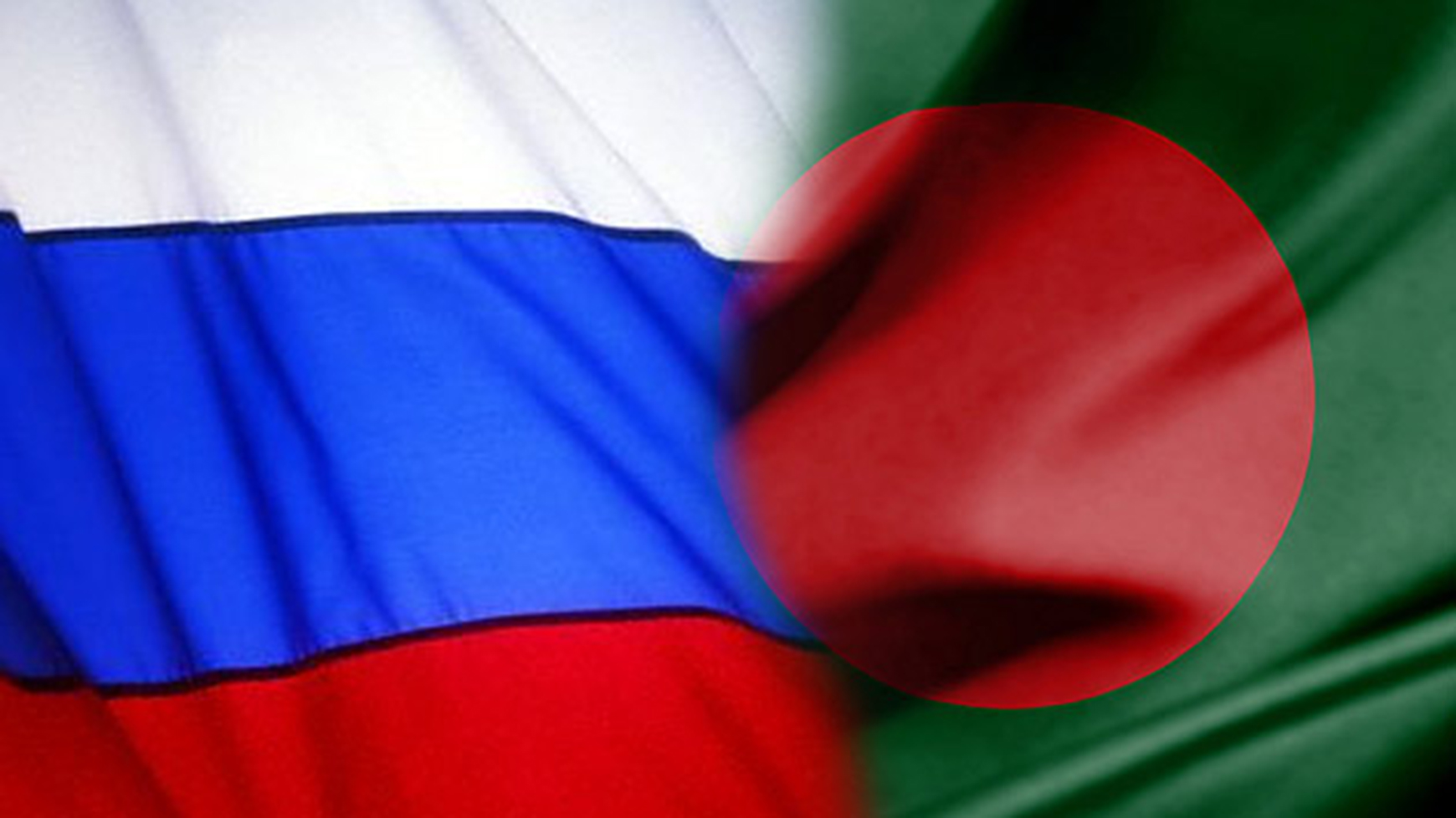
DHAKA: Bangladesh signed an agreement with Russia to establish an intergovernmental commission on trade, economic, scientific and technical cooperation to ‘further strengthen bilateral relations.’
State Minister for Foreign Affairs Shahriar Alam who signed the agreement said that this would open “a new horizon” in Bangladesh’s relations with Russia.
Russia’s Deputy Minister for Economic Development Alexey Gruzdev signed the agreement earlier in Moscow which was handed over by Russian Ambassador in Dhaka Alexander I Ignatov at the ceremony.
Foreign Minister Abul Hassan Mahmood Ali witnessed the signing and said this would ‘further strengthen bilateral relations’ between the two countries.
Russia is helping Bangladesh to set up its first nuclear power plants at Rooppur. Both sides also waived visas for each other’s diplomats and officials.
“There are huge potential to boost our relations. For us, Russia can be a huge market for our readymade clothes and we are expecting to get duty-free access in the region,” the state minister said.
He said there would be sector-wise working committee through this joint mechanism of intergovernmental commission.
Bangladesh exports frozen foods, jute and jute products, tea, leather, home textiles and ceramic products to Russia and imports cereals, minerals and chemical products, plastic products, metal, machinery and mechanical equipment from Russia.
The two-way annual trade is worth about $1.5 billion.
The Russian ambassador said they have such kind of agreement with many other countries. “This will accelerate the cooperation in the areas we need to develop,” he said.
Both parties will appoint co-chairs, with deputies and executive secretaries to carry out the Commission’s work.
Permanent or ad-hoc working groups on specific areas of cooperation may be established within the framework of the Commission by a joint decision of the Co-Chairs.
The number of members of national parts of the Commission would not exceed 20 from each party.
“The Commission will meet at least once a year, alternately in the capitals of Bangladesh and the Russian Federation”.