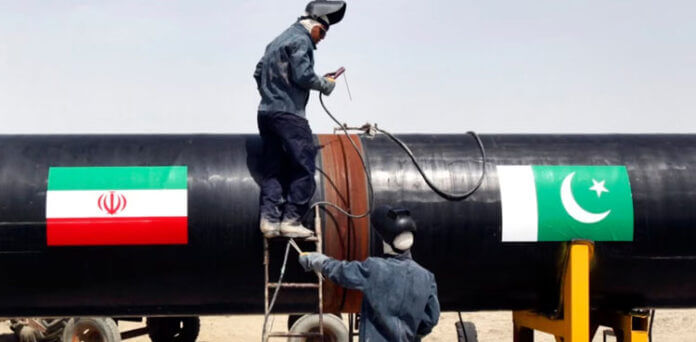
KARACHI: Pakistan has informed Iran that it intends to shelve the long-stalled Iran-Pakistan (IP) gas pipeline project through an out-of-court settlement mechanism, while keeping the option open to revive the project if sanctions relief from the United States is obtained.
The project has been stalled since 2014, primarily due to U.S. sanctions. At the same time, Pakistan is currently facing lower domestic gas demand and surplus supply, making the pipeline commercially unattractive under existing conditions, according to Express Tribune.

Iran has already approved a 10-year extension to the agreement and is open to granting further extensions if needed. However, Pakistan prefers to terminate the deal altogether rather than prolong a project it views as non-viable in the present circumstances.
Officials noted that Pakistan would only consider another extension if two key conditions are met: US sanctions relief and a significant reduction in both the agreed price and volume of Iranian gas. Without these concessions, Islamabad believes proceeding with the project would not make economic sense.
Both sides have remained engaged through back-channel diplomacy after Iran initiated legal action over the non-implementation of the pipeline agreement. The issue has also been taken up during recent visits by senior Iranian officials to Pakistan.
Officials reiterated that Pakistan had informed Iran earlier that the pipeline could not move forward due to US sanctions. They added that gas availability in the country is currently sufficient, which is why the government decided to scrap LNG supply contracts with Qatar from 2026. Iranian pipeline gas, they further said, is costlier than imported LNG.
Iran, on the other hand, maintains that it has already completed construction of its portion of the pipeline up to the Pakistan border, while Pakistan has yet to begin work on its side.
US State Department spokesperson Matthew Miller has also warned countries to carefully assess the implications of commercial agreements with Iran in light of sanctions.
The report revealed that Pakistan had earlier explored an alternative plan to build an LNG pipeline from Gwadar to the Iranian border, but the proposal was dropped due to concerns tied to US sanctions.
Meanwhile, Pakistan is struggling with excess LNG supplies. Imported LNG for the power sector has not been fully utilized, creating surplus gas in the system. To mitigate this, the government has announced discounted electricity for agriculture and industry and lifted a decade-long ban on new domestic and commercial gas connections.
Officials said the objective now is to boost gas consumption to manage surplus LNG, adding that any new connections will be charged at LNG-based tariffs.