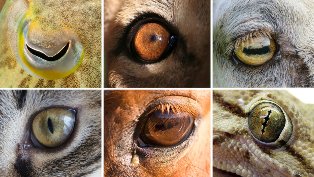


CANADA: When it comes to whether an animal is predator or prey, the eyes have it — or at least when it comes to pupil shape, researchers say.
A creature’s ecological niche — and its likely place in the predator/prey food chain — is reflected in pupil shape, scientists at the University of California, Berkeley, have found.
Pupils with a vertical orientation — think of that house cat stalking a mouse — are more likely to be found in ambush predators who will hunt prey in both day and night, they say.
Horizontally elongated pupils, on the other hand, are found in prey species with eyes widely spaced on the sides of their heads, the better to spot an approaching predator, they explain.
“We found a striking correlation between pupil shape and ecological niche,” says study lead author Martin Banks, who along Berkeley colleagues and researchers in the United Kingdom analyzed eye configuration in 214 species of land-dwelling animals.
Pupil shape is not exclusively limited to vertical or horizontal, they point out; predators active during the day, including humans, have evolved circular pupils.
And there were some exceptions to predicted pupil shape, the researchers report.

Karachi Port sets 138-year cargo handling record
KARACHI: Pakistan's maritime sector has achieved a major milestone as Karachi Port set a new record in its 138-year history...