Customs Today
  • Home
  • Islamabad
  • Karachi
  • Lahore
  • National
  • Transfers and Postings
  • Chambers & Associations
  • Business
No Result
View All Result
Customs Today
  • Home
  • Islamabad
  • Karachi
  • Lahore
  • National
  • Transfers and Postings
  • Chambers & Associations
  • Business
No Result
View All Result
Customs Today
No Result
View All Result
Home Chambers & Associations

APTMA seeks ban on import of yarn, fabric from India

byNadir Khan
13/10/2015
in Chambers & Associations, Latest News, Pakistan Chambers
Share on FacebookShare on Twitter

PESHAWAR:  All Pakistan Textile Mill Association demanded that the government place a ban on the imports of yarn, fabric, and garments from India.

Chairman APTMA voiced his concern over the situation, saying that imported and smuggled textile goods have created a crisis in the textile industry and are hurting domestic commerce.
You might also like

RCCI engages tax policy office on budget proposals & business reforms

07/05/2026

Govt restricts private OMCs from importing high-speed diesel

07/05/2026

A bird’s eye view of SBP import numbers tells us that by and large, there are only a handful of categories from the yarn and fabrics segment where India has a high share worth mentioning. These fall under the cotton category and include Cotton not carded or combed (HS code 5201), Cotton yarn containing 85% or more by weight of cotton (HS code 5205), and Woven fabrics of cotton containing 85% or more by weight of cotton (HS code 5209).

So, within the cotton category, there are only three subcategories where India has a significant presence (in dollar terms as well as overall share), and outside of it, just a couple of subcategories. So, one might think that APTMA is exaggerating the situation.

Then again, one must keep in mind that the cotton category is a big one, and amounts to over one-fourth of total textile imports as of FY15. Thus, within these three subcategories alone, India amounts to almost 32 percent of Pakistan’s cotton imports, and over 8 percent of total textile imports.

When one compares the numbers to FY14, however, it turns out that Indian cotton imports have fallen by an enormous 48 percent year-on-year. Moreover, the share of the three major Indian imports in Pakistan’s total textile imports was 17 percent in FY14. As of FY15, it’s 8 percent. If anything, things have gotten much better, so why is APTMA complaining?

Well, in dollar terms, Pakistan’s textile imports from India have been markedly lower year-on-year in FY15. But when one looks at the PBS volumetric data for FY15, Pakistan’s textile imports were up by 13 percent year-on-year.
Related Stories

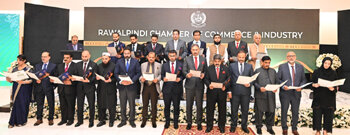
RCCI engages tax policy office on budget proposals & business reforms

byCT Report
07/05/2026

RAWALPINDI: President Rawalpindi Chamber of Commerce and Industry (RCCI), Usman Shaukat, who also serves as Chairman PPMA North, held a...

Govt restricts private OMCs from importing high-speed diesel

byCT Report
07/05/2026

KARACHI: The federal government has restricted private oil marketing companies (OMCs) from importing high-speed diesel (HSD), permitting only Pakistan State...

Punjab becomes first province to introduce general insurance company: Maryam Nawaz

byCT Report
07/05/2026

LAHORE: Punjab has become the first province in Pakistan to introduce a general insurance company, marking a significant step towards...

Pakistans Raast hits Rs50 trillion in 2025 as digital payments surge

byCT Report
07/05/2026

KARACHI: Pakistan’s digital payments landscape is expanding rapidly. The State Bank of Pakistan (SBP) released its Financial Stability Review for...

Next Post

Sales tax evasion: Punjab Revenue Authority seals marriage hall in DHA

  • Terms and Conditions
  • Disclaimer

© 2011 Customs Today -World's first newspaper on customs. Customs Today.

No Result
View All Result
  • Transfers and Postings
  • Latest News
  • Karachi
  • Islamabad
  • Lahore
  • National
  • Chambers & Associations
  • Business
  • About Us

© 2011 Customs Today -World's first newspaper on customs. Customs Today.