

Customs Today
  • Home
  • Islamabad
  • Karachi
  • Lahore
  • National
  • Transfers and Postings
  • Chambers & Associations
  • Business
No Result
View All Result
Customs Today
  • Home
  • Islamabad
  • Karachi
  • Lahore
  • National
  • Transfers and Postings
  • Chambers & Associations
  • Business
No Result
View All Result
Customs Today
No Result
View All Result

Australian fruit exports up vegetable exports down

byCT Report
15/03/2018
in Uncategorized
Share on FacebookShare on Twitter

You might also like

SAARC chief urges turning South Asia’s challenges into opportunities

24/04/2026

DG Valuation revises import values for PVC, PU coated vide VR No.2068/2026

24/04/2026

CANBERRA: Australian fruit exports have exceed $AU1billion for the first time within a calendar year, fresh vegetable exports have suffered drops in key markets of over 50%.

Wayne Prowse of Fresh Intelligence Consulting told Fresh Plaza that, between 2016 – 17, vegetable exports declined in key markets such as Indonesia, Europe and Taiwan.
“The main reasons for this decline is a drop in demand for onions from Europe, a return to normal trade to Taiwan after increased demand in 2016 due to the typhoons damaging local crops, and the swinging door of Indonesia’s import conditions,” said Wayne.
Although the volume of fresh vegetable exports declined 13 per cent overall the value increase 2 per cent to $AU252M as the mix changed with more higher value products being exported such as lettuce and broccoli.
Fresh vegetable exports from Australia are sent to a wide range of destinations. While Singapore and Japan had traditionally been the major destinations; four years ago the United Arab Emirates surpassed Japan to become Australia’s second largest fresh vegetable export destination.
Carrots remain the largest vegetable export at $AUD94M, followed by potatoes and onions.
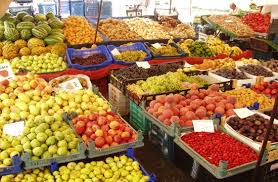
In contrast fresh fruit exports in 2017 were up 15% on the previous year, bringing export totals to $AUD1.1B on 456,742 tonnes.
“There are a number of factors producing this improvement, including strong ongoing Asian market demand, favourable exchange rates, improved market access through lower tariffs from free trade agreements with China and Japan.”
“We know China continues to drive the most growth where Australia continues to capitalise on the increased demand for counter seasonal fruit.”
“The China growth off set a decline in trade to Hong Kong although the combined result is 83 per cent more than 5 years ago with China firmly in front.”


Related Stories

SAARC chief urges turning South Asia’s challenges into opportunities

byCT Report
24/04/2026

ISLAMABAD: President of the SAARC Chamber of Commerce and Industry, Chandi Raj Dhakal, has emphasized that South Asia’s economic and...

DG Valuation revises import values for PVC, PU coated vide VR No.2068/2026

byCT Report
24/04/2026

KARACHI: The Directorate General of Customs Valuation has revised customs values for imports of PVC, PU and other coated fabrics...

PM clears NBP’s long-awaited Rs35 per share dividend

byCT Report
24/04/2026

ISLAMABADI: National Bank of Pakistan has received approval for its long-delayed dividend payout after Prime Minister Shehbaz Sharif cleared the...

SBP eases import financing rules for oil & LNG amid geopolitical crisis

byCT Report
24/04/2026

KARACHI: The State Bank of Pakistan (SBP) has revised key foreign exchange instructions to facilitate the import of crude oil,...

Next Post

Shell close to clinching Hong Kong's first LNG import deal

  • Terms and Conditions
  • Disclaimer

© 2011 Customs Today -World's first newspaper on customs. Customs Today.

No Result
View All Result
  • Transfers and Postings
  • Latest News
  • Karachi
  • Islamabad
  • Lahore
  • National
  • Chambers & Associations
  • Business
  • About Us

© 2011 Customs Today -World's first newspaper on customs. Customs Today.