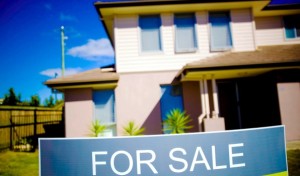
CANBERRA: Housing prices in Australia are now 12 per cent overvalued, says a leading investment bank that has raised the opportunity for policy leaders to launch tougher measures to make property prices fairer.
Barclays chief economist for Australia, Kieran Davies, compared a variety of factors including the growing gap between household income and mortgage rates, as well as the ageing population and the working age of the population, to develop a model that found property prices were above fair value.
You might also like


“As we have long remarked, house prices have appeared expensive relative to both household incomes and rents for more than a decade now,” Mr Davies said.
“The problem with these simple valuation measures is that the recent experience is unprecedented and it is not clear to us when they will correct, or even if they will fully revert to their long-term averages.”
Australia experienced 15 per cent annualised growth in May and June, with prices up 10 per cent since the start of the year. This brings house and apartment prices to almost 50 per cent higher than pre-global financial crisis prices. Globally, housing prices are still 4 per cent lower than pre-GFC prices.
“The growth in (Sydney) house prices is not only rapid by Australian standards, it is strong in an international context,” Mr Davies said.
The report found higher income coupled with lower interest rates and a rapidly growing population had boosted house prices, while the increasingly ageing population was holding back price growth slightly.
An overvaluation of 12 per cent is the third highest on record. Both 2003 and 1989 had even higher overvaluations: 2003 holds the record with a 22% overvaluation, followed by the 1989 rate of 14 per cent.
“Tougher macroprudential policy could help close the gap with fair value, although last year’s steps do not seem to have had much effect yet given prices have accelerated so far this year,” Mr Davies said.
These policies could include raising interest rates or targeted housing price control measures.
Debate over housing affordability has been raging recently. Last week, a note issued by Reserve Bank senior research Manager Peter Tulip described Australian property as 30 per cent undervalued.
“We find that owning a house costs 30 per cent less than renting,” Dr Tulip told the session. “That is, houses are 30 per cent undervalued.”
However, The Australian Financial Review columnist Christopher Joye published a detailed critique of Dr Tulip’s findings, describing them as “among the most extraordinarily inane remarks from an ostensibly intelligent public official”.
Earlier this month, UBS senior economist George Tharenou said a correction for Australian house prices was due and likely to begin in 2016 or 2017 when the Reserve Bank of Australia inevitably raises interest rates.
“Overall, housing is showing some bubble-like features, but it lacks a trigger to pop it near-term,” Mr Tharenou said, adding an interest rate increase had been key to the falling property prices in 2003, 2007 and 2010.
“Those downturns were only triggered when the RBA hiked,” he said. “Historically the key catalyst for housing approvals to peak is RBA rate hikes; not excess supply or unemployment.”
The Barclays report comes after the release of a research paper by Swinburne, Curtin and the University of Western Sydney analysed Australian house pricing patterns and forecast Melbourne, Brisbane and Perth prices would begin to fall within months while Sydney’s would continue to grow for the next year.
The paper, currently under review for the Economic Record, predicted Sydney house prices were expected to climb by 6 per cent before beginning to decline.
Meanwhile, in the same 12 month period, Melbourne prices would fall by 9.2 per cent within a year, with Perth and Brisbane following suit with 5.2 and 8.1 per cent respectively.