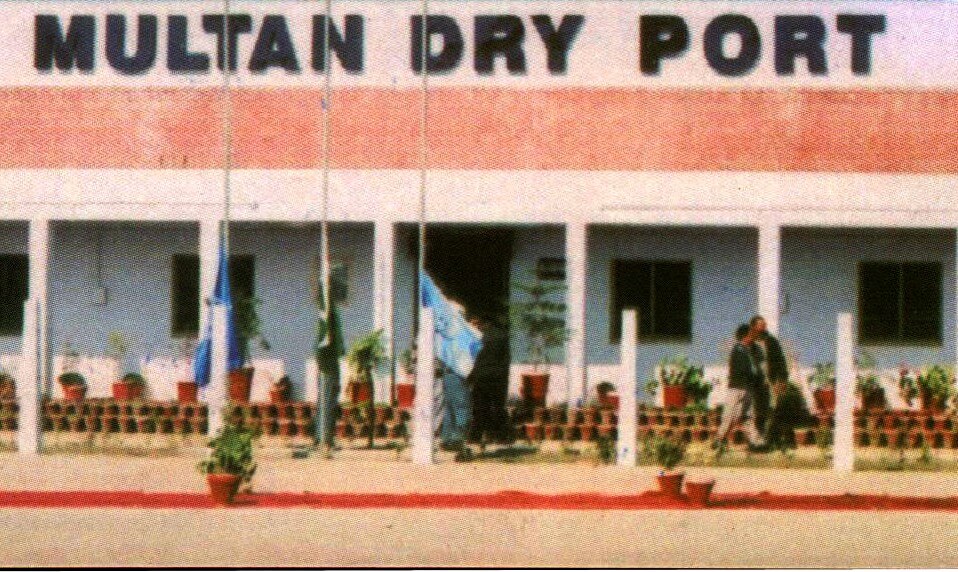
MULTAN: As the clock ticks towards March 2025, the newly implemented faceless customs system is expected to be fully operational at all Multan Dry Port terminals. However, exporters and importers are raising serious alarms, citing the systems delayed activation in a region that plays a crucial role in Pakistan’s trade landscape.
Despite Multan’s significance as a major dry port, the faceless customs clearance system has yet to be implemented, and stakeholders are growing increasingly frustrated by the lack of concrete action.


Efforts to activate the system are underway, but concerns are mounting about the delay and its implications on trade efficiency. The Prime Minister has directed the Ministry of Information Technology and FBR to expedite the process, ensuring that the faceless system is rolled out at both the Multan Dry Port and Multan International Airport. However, exporters are questioning why such critical infrastructure has not yet been prioritized, especially given the growing pressures on trade logistics.
The shift to artificial intelligence and a reduction in human intervention is expected to revolutionize the customs clearance process in Multan, but stakeholders are worried about the growing gap between implementation timelines and actual progress.
This technological leap is poised to significantly improve trade efficiency, but with the current delays, the region risks losing its competitive edge as businesses face higher costs and bottlenecks due to the lack of automation.
The Prime Minister’s push for a track and trace system to be implemented across various industrial sectors, including those in Multan, also raises concerns. While industries like tobacco, fertilizer, sugar, and cement have already seen a boost in revenue due to the system, Multan’s key agricultural and manufacturing sectors are still waiting for full implementation.
Importers and exporters are voicing frustration, claiming that the delays in the track and trace system’s roll-out are causing lost opportunities and financial setbacks.
Revenue generation has increased substantially in other parts of the country, but Multan’s economic players feel left behind. The anticipated improvements in the agricultural and manufacturing sectors are critically dependent on the timely activation of both the faceless customs and track and trace systems. Until this happens, many in the industry fear the loss of market competitiveness, as inefficient systems continue to hold back Multan’s potential as a key trade hub.
To further complicate matters, the new customs inspection system which is set to incorporate mobile signal jammers, body cameras, and CCTV cameras to ensure transparency has yet to be fully implemented at Multan’s terminals.
Exporters and importers are demanding immediate action to ensure that these measures are brought into force without further delay. With inspections often cited as a significant bottleneck in the clearance process, there is growing anxiety among business owners about the lack of clear timelines for these vital upgrades.
While the Prime Minister’s directive to improve transparency and operational efficiency in customs is clear, Multan’s trade stakeholders are calling for swift action. The ongoing delays in the implementation of both the faceless customs system and track and trace technology are jeopardizing Multan’s position in the global trade arena.
As the deadline for full implementation looms, exporters and importers are demanding answers and a clear commitment to fast-tracking these reforms before their businesses face irreversible setbacks.
In conclusion, while the Prime Minister’s vision for modernizing the FBR and improving Pakistan’s revenue generation is commendable, Multan’s export and import community is under pressure. The clock is ticking, and the stakes are high. Immediate action is required to avoid further delays and ensure that Multan remains a key player in Pakistan’s evolving trade and commerce landscape.