BEIJING: Chinese authorities have turned cautious over the expansion of Shanghai’s free-trade zone into a free port along Hong Kong lines, concerned that unfettered flows of goods and money could pose a risk to financial stability.
According to two sources familiar with the government’s thinking, state authorities and the Shanghai municipality have yet to decide on the size and location for the free-trade port an upgraded version of the free-trade zone that was launched in late 2012.


Officials are still giving priority to safety and stability in reviewing the two proposals for the port, the sources said.
One of the concerns is that monitoring mechanisms may not be adequate to ensure that goods and money stay inside the port area and do not flow outside it without being subject to duties.
A free-trade port should have a large geographical size for manufacturing, commercial and warehousing purposes, said Professor Chen Bo from the Huazhong University of Science and Technology and adviser to local governments including Shanghai’s.
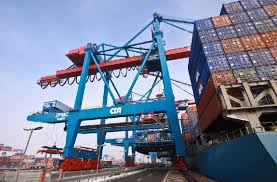
“The Yangshan deep water port, which covers a total area of about 2 sq km, appears to be too small for a free-trade port,” he said.
In Shanghai’s existing 120sq km free-trade zone, tariffs are still imposed by customs authorities and cross-border money flows under the capital account are closely monitored and subject to regulatory approval.
The Industrial and Commercial Bank of China said in a research report last week that the free-trade zone in Shanghai lagged far behind Hong Kong and Singapore in terms of trade and investment facilitation, openness of the financial market and preferential taxation policies.