ISLAMABAD: The country’s circular debt stands at Rs596 billion, with an increase of Rs.30 billion in the month of July, the Economic Coordination Committee (ECC) was told in its first meeting.
In the presentation, the Ministry of Energy, Power Division, officials maintained that since another Rs.582 billion remained parked with power holding companies, the total liability stood at Rs.1,188 billion.


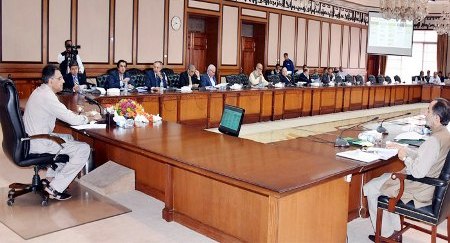
The ECC that met under the chairmanship of Asad Umar, the federal minister for Finance, Revenue, and Economic Affairs, identified key areas contributing to the circular debt and formed committees to identify causes and formulate suggestions for fixing the problem in the next ECC meeting, likely to be scheduled in the next week. The suggestions would then be submitted to the cabinet for its approval.
Minister Umar said all facts would be shared with the public to make decision making a transparent and inclusive exercise.
In its maiden meeting since the change in government, the ECC also put off a decision on the import of fertiliser and set up a committee to determine reasons behind the shortage and increase in its prices in the domestic market.The ECC did not take up a summary on increase of gas prices of up to 180% due to the shortage of time.
The government will not commit more funds to the power sector until the concerned ministries provide a solution to the problems that caused the buildup of circular debt, said Finance Minister Asad Umar. He said more information was also required before the ECC could finalise a decision to tackle the crisis.
The PTI government is aiming to seek solutions to the issues that have caused the buildup of a whopping Rs1.2 trillion circular debt as of July-end. After assuming office in May 2013, the PML-N government had cleared the Rs480-billion circular debt without fixing the problem. At the end of its tenure, outstanding circular debt again stood at over Rs550 billion, excluding liabilities parked in a holding company.
The Rs480-billion circular debt payments of 2013 are also under investigation by the National Accountability Bureau (NAB), as the previous government cleared payments within 24 hours by bypassing all laid down procedures.
An official handout of the finance ministry stated that the Ministry of Energy gave a detailed presentation on the amount of circular debt. According to the compiled data of up to July 31, 2018 by the ministry, it was brought to the ECC’s notice that the amount of circular debt is standing at Rs596 billion with an increase of Rs30 billion last month, stated the finance ministry.
Another Rs582 billion are also parked with the Power Holding companies, which previous governments borrowed from commercial banks to repay to power generation companies, it added. The Ministry of Finance said the total liability currently stands at Rs1.19 trillion.
The ECC also identified five to six key areas that accounted for the pileup and formed different committees to work upon the reasons and formulate their suggestions to be presented in the next ECC meeting that is to be scheduled next week, stated the finance ministry.
It stated that the ECC will later present its suggestions to the Cabinet for the approval and decision on the future course of action. The ECC chairman stated that all facts will be shared with the public to make decision-making a transparent and inclusive exercise.
The finance ministry stated that the ECC also deferred a summary that was presented to financially bail out Pakistan State Oil. It stated that this issue was closely linked with circular debt, therefore the matter would be considered subsequently.
The ECC did not take up a summary that sought up to 180% increase in gas prices due to paucity of time.
The finance minister took exception to the flawed strategy adopted by the last government that gave undue benefits to local fertiliser manufacturers. The last PML-N government first allowed export of fertiliser and when shortage occurred in the local market, they increased the prices, fleecing the farmers.
The ECC directed to fix the issue for the Ministry of Industry’s inaction when manufacturers increased prices of fertiliser by up to Rs215 per bag, said the minister.
“The chairman ECC expressed displeasure on the issue of fertiliser pricing and its export, taken by the previous government, which was totally against the interests of the farmer community,” according to the official handout. He said the interest of the poor farmer should be the supreme motivation for taking such decisions. The ECC was informed that the total requirement of fertiliser for the country for this sowing season would be around 600,000 tons.