ISLAMABAD: Although no direct revenue has been generated out of Afghanistan-Pakistan Transit Trade Agreement (APTTA), yet national economy has derived multiple benefits out of this agreement.
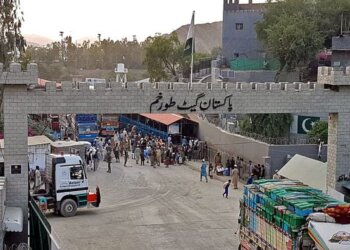
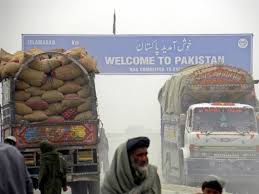
APTTA came into force between Afghanistan and Pakistan on June 12, 1011 and it replaced the 1965 Agreement, Afghanistan Transit Trade Agreement or ATTA. APTTA allows Afghan trucks to carry Afghan products to the huge markets of India and China as well as the rest of the world through the seaports of Karachi, Port Qasim and Gwadar.


“The APTTA-2010 was signed by Pakistan in view of the bilateral relations between the two neighbouring states” a well placed source at MoC told this scribe here on Saturday, adding that according to the international transit trade practices, no duties and taxes were levied on the goods in transit, therefore, no direct revenue was generated through transit.
Even then national economy has derived multiple benefits out of APTTA-2010, through different ways including Pakistani ports got business and the Terminal Operators received considerable amounts in the shape of port charge, scanning fees etc. for handling of the transit trade cargo.
Similarly, the freight forwarders, and carrier equipment handlers also benefited from the transit trade in monetary terms. The transport companies also earned on account of transportation of the transit cargo to and from Afghanistan.
Multiple business involving private sectors throughout the country alongside the transit trade routes also got a boost due to the volume of transit trade cargo. The cargo handlers including the Customs agent, Shipping Agents, Border Agents, Trackers Installing Companies, etc. also benefited from the transit trade.
In the light of above, though the benefits accrued to Pakistan from APTTA 2010 cannot be quantified in monetary terms, different sectors of economy benefited from the transit trade to and from Afghanistan.
However, transit through a country may result in smuggling and pilferage in the country leading to loss of revenue. In order to plug this, FBR has put in place effective enforcement mechanism by installing trackers on prime movers and containers and through electronic exchange of data.
Apart from transit trade arrangements, Afghanistan is one of the largest trading partners of Pakistan with the bilateral trade hovering at $ 2 billion 5 year.
An analytical view of statistics of Pak- Afghan bilateral trade during last five years show that trade balance has been in favour of Pakistan as well as Pakistani exports to Afghanistan had been several times higher than the imports from Afghanistan.
In 2009-10 total volume of Pak-Afghan bilateral trade was $1710.8 million and Pakistani exports were $1571.5 million while imports tuned to $139.3 million. Trade volume touched the highest figures in 2010-11 when it tuned to $2508.7 million and Pakistani exports were of $2336.7 million whereas imports were $172 million.
In 2012-13, volume of bilateral trade was $2353.8 million and Pakistani exports were$2066 million and imports were $287.8 million. Similarly, total volume of trade between Pakistan and Afghanistan was $ 2030.1million and Pakistani exports were $1870.5 million and imports were tune to $359.6 million.
It is pertinent to note here that APTTA has increased Afghan exports and reduce delays at borders. It makes Afghan products more competitive, attractive, and affordable abroad. APTTA modernized business and customs practices in both countries by simplifying and standardizing procedures at the borders.