MONTREAL : Keeping Canadian city streets clear in winter has been a source of aggravation since the days when work details shovelled snow into horse-drawn sleds.
But as the coldest months of the year arrive, Canadian municipalities are increasingly turning to innovative solutions to address the problem. Apps, drones, new machinery and alternatives to traditional materials are being introduced to balance safety and efficiency with budget constraints.


In Montreal, where every winter authorities have to remove some 12 million cubic metres of snow from streets and sidewalks covering a combined 10,000 kilometres, all these solutions are set to be deployed, according to city spokesman Philippe Sabourin.
To help figure out where to put all that snow, the city this year will dispatch drones to fly over the city’s massive snow dumps and identify spaces where more can be added.
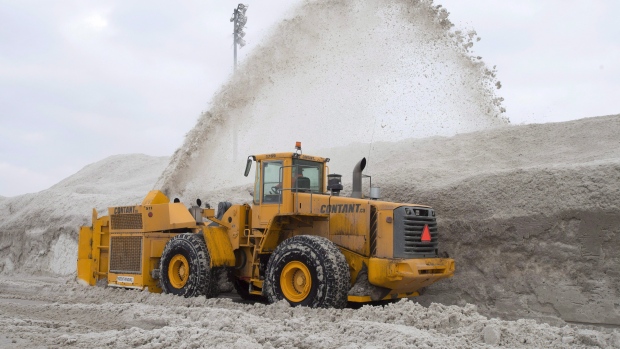
The city’s Angrignon dump can reach “something like 10 storeys high, more than four football fields long, so we’re using drones to optimize the space, because it’s so high that we cannot see the top of the hill,” Sabourin said.
Last year, the Projet Montreal administration faced criticism after above-average snowfalls led to overflowing dumps, tardy snow clearing and a jump in complaints from citizens who slipped and fell on uncleared sidewalks.
To address those concerns, the city has announced improvements to its Info-Neige application, which tracks snow-removal operations in real time and helps citizens find free parking when streets are blocked.
One app linked to Info-Neige is a kind of snowplow snitch line, allowing citizens to send the city photos of badly cleared sidewalks. Another helps people find cars towed during snow-clearing operations, Sabourin said.
A big part of the snow removal problem is the cost — about $1 million for each centimetre of accumulated snow, he said.
This year, the challenge is greater because a strike at the Goderich, Ont. salt mine has led to price increases. Montreal this year is paying 30 per cent more to import road salt from Chile.
Other cities are looking for ways to turn away from traditional rock salt, which has been found to corrode infrastructure and pose a risk to plants, animals and waterways.
Saskatoon is following Switzerland’s lead and testing wood chips to improve traction on roads, while in the United States, there have been reports of cheese brine, pickle brine and potato juice being tested as de-icers.
Several Canadian cities, including Calgary, have been experimenting with a mixture of sugar beet molasses and salt brine as a de-icing agent.
The beet brine is less corrosive than pure salt, and the product’s slight stickiness allows it to stay in place, meaning less product is needed, Jim Fraser, Calgary’s central district roads manager, said in an email.
Fraser said that based on promising results it has quadrupled its beet brine order from 30,000 litres last year to 120,000 litres for the 2018-2019 season.
While Montreal has found the beet product clogs equipment and can stain clothing and carpets, Calgary hasn’t had that problem.
The city has been using beet brine mostly in industrial areas, but it has found the product easy to apply and no harder to remove from vehicles than road salt. “Anecdotally, the product has easily washed off clothing of city staff,” Fraser said.
Edmonton, meanwhile, has been testing an anti-icing calcium chloride brine spray on its roads before plowing. It hopes the alternative to sand or rock salt will save money, reduce the environmental impact and improve safety by ridding streets of snow and ice more quickly.
Infrastructure operations director, Janet Tecklenborg, said the pilot project saved Edmonton $4 million last year. Now, the city is focusing on studying the brine’s impact on infrastructure, greenery, and road safety.
“We’re hoping to see, as they have in other jurisdictions, a reduction in the number of collisions and an improvement in safety by reaching bare pavement,” Tecklenborg said.
In addition to the anti-icing project, she said Edmonton has begun using GPS technology on its heavy equipment to better monitor where melting and abrasive products are spread. The goal is to reduce the amount of material by up to 30 per cent.
Eventually, she’d like to see Edmonton follow the lead of other jurisdictions that monitor pavement temperature, humidity and local weather factors so crews can lay down the right material at the right time.
Tecklenborg and Sabourin say changes in winter temperatures are both helping and hindering snow removal efforts.
For example, melting products that are ineffective in a deep freeze work when the temperature is warmer. But an increasing number of freezing rain events and water main breaks has created new challenges, prompting Montreal to buy eight of what the mayor calls “ice-crusher” machines.
As winter cycling grows in popularity, Montreal is also experimenting with brushes and liquid salt in order to better remove ice from its network of all-weather bike paths.
But despite the push for better technologies, Sabourin says the city still has no intention of resurrecting the previous administration’s dream of heated sidewalks along a downtown stretch of Ste-Catherine Street, which was scrapped last year amid cost concerns.