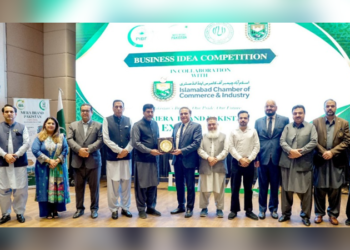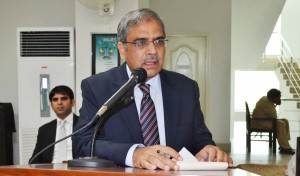
ISLAMABAD: Government Committee members led by the Prime Minister’s Special Assistant on Revenues Haroon Akhtar Khan, MNA Abdul Mannan and the Chairman FBR, met business and traders’ representatives at the Rawalpindi Chamber of Commerce and Industry today.
From FBR senior Member Shahid Hussain Asad, Member Facilitation Nadeem Dar, Chief Commissioner RTO Rawalpindi and his team, Chief Policy Abdul Hameed Memon, and Zubair Tufail from the Pakistan Federation of Chambers and Industry were part of the delegation from the government formed three committees to discuss issues raised by the business community on matters arising from the new advance income tax withholding of 0.6 percent on bank transactions.
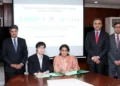
The business representatives initially expressed their reservations on being taxed on their bank transactions. However Prime Minister’s Special Assistant Haroon Akhtar and the Chairman FBR Tariq Bajwa dispelled their apprehensions on many counts. The traders were content to learn that retailers will no longer be subjected to voluntary sales tax registration even if their sales cross the Rs 5 million marks. Mian Abdul Mannan MNA said that this was the result of the government’s earlier discussions with the business community and is proof of the government’s intentions to facilitate the business environment.
Sheikh Muhammad Siddique (Rawalpindi traders) suggested that the government should prioritise one sector and announce the concessions it is willing to accord to it. This will build the confidence of the business community and ease the settlement of other issues sooner.
Other prominent businessmen like Sheikh Nasim, MrShamim Ahmed, Sheikh M. Arif, Z Mr Haroon china market, Pr small chamber Afzal Kahut, ShHafeez president Saddar Association, and Mr Nawaz Ex-President RCCI, Bakhtawari, and Ch Iqbal spoke on issues that may arise from this tax.
The PM’s Special Assistant Haroon Akhtar Khan sincerely expressed his advice to the businessmen that Pakistan’s tax environment is much more easy than it is in other developed countries, and that with the FBR’s increased capabilities of computerization and data collection the future tax environment in Pakistan is not likely to soften.
He therefore advised them to make most of the present government’s willingness to remove genuine concerns of the business community and to implement the tax in manner that brings documentation to the economy and at the same time makes businesses entry into the formal economy an easy matter.
It was expressed that the committees with mutual consultation of the business and FBR have drafted a simple and one-paged tax return form for new businesses. The form will be included in the recommendations that will be put forward by the committees to government for final decision.
On complaints aired by certain businessmen on implementation of tax measures, the chairman FBR declared that his door was open to them and they could expect immediate action on any complaint sent to him on phone or in person.
The proposals put forth by business representative included the levy of income tax on income from agriculture and the suspension of tax on bank transactions for 1 year, both of which did not find universal support.
Other proposals included lower tax rates for high-volume but low profit business, the expansion of the universal self assessment concept to declared income/sale/capital ratios, voluntary enhanced declarations to conditional freedom from audit and on sales tax impact be limited to manufacturing and distribution and not to wholesalers and retailers, who could be subjected to a separate simple tax like a tax on consumption.
RCCI President Mashadi who had conducted the meeting, also said that the talks with the government were focused on the next tax declarations and ignored the businessmen who were already subjected to heavy taxation during the past 12 months on account of undeclared bank accounts. He suggested that the government should also give a simple solution to such businesses by taxing such bank transactions on a token amount like 0.3 percent and save them from the long drawn process of appellate processes, which could be designed to be delivered through Alternate Dispute Resolution System (ADRC) or the like.
The committees will also make consultations with the Islamabad traders at Islamabad tomorrow, Wednesday 12 August, 2015.