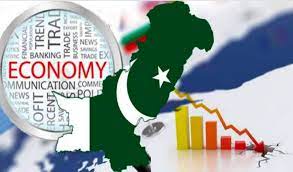
KARACHI: Unprecedented flash floods, caused by historic monsoon rains, have washed away roads, crops, infrastructure and bridges in Pakistan, killing over 1,100 people since mid-June and affecting more than 33 million.
Pakistan’s central bank had already flagged the heavy rainfall as a threat to the economic output, given its impact on the agriculture sector.


As per an early and preliminary estimate by government officials, the damage from the floods could exceed $10 billion.
Till now, the southern, southwestern and northern belt have been the hardest-hit by the floods. Large swaths of farmlands and stored crops in these areas have been devastated.
Recently, Pakistan’s Minister for Planning Development Ahsan Iqbal told Reuters that 45% of the cotton crops had been washed away, while early wheat sowing in southern Pakistan has also been affected. Moreover, many rice fields, as well as lands where vegetables and fruits are planted, have been inundated.
Seasonal crops are critical to the economy, particularly cotton which makes up more than 60% of the country’s exports, according to the data of the finance ministry.
The Karachi-based Arif Habib Limited in its report titled ‘Floods 2022 – Inundated with Economic Woes’, states that Pakistan has recorded the worst floods since 2010, with rainfall crossing 390 mm this season. This is “three times higher than the national 30-year-average of 135 mm,” it adds.
The report further notes that the impact of the calamity is expected to last 30-45 days, while the rehabilitation process will take much longer. It also estimates around Rs1.2 trillion ($5.3 billion) in losses to the economy, which is around 1.48% of the gross domestic product (GDP).
Arif Habib Limited forecasts the GDP growth to shrink to 2.49% in the fiscal year 2022-23, against earlier base case assumption of 2.97%. But a rebound is expected the following year with GDP to settle at 4.4%.
It calculated the current account deficit to grow by $1.98 billion, due to the import of food commodities and shrinking exports of textile, rice and sugar given the shortage in the country and inflation to witness further pressure this quarter, settling at 19.7% in the financial year 2023.
It also expects short-term demand to hit the cement, steel, automobile, oil marketing companies and fertilizer sectors. However, the majority of these sectors could likely benefit from the rehabilitation process.
Analysts and economists Geo.tv spoke to paint an even grimmer picture, warning that the impact of the floods could be devastating for the country, which was already in the midst of an economic crisis, faced with high inflation, a depreciating currency and a current account deficit.