Customs Today
  • Home
  • Islamabad
  • Karachi
  • Lahore
  • National
  • Transfers and Postings
  • Chambers & Associations
  • Business
No Result
View All Result
Customs Today
  • Home
  • Islamabad
  • Karachi
  • Lahore
  • National
  • Transfers and Postings
  • Chambers & Associations
  • Business
No Result
View All Result
Customs Today
No Result
View All Result
Home Latest News

Global warming exerts double impact on Arctic migrating birds

byCT Report
13/05/2016
in Latest News, Science
Share on FacebookShare on Twitter

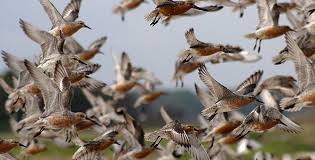
WASHINGTON:  Red knots, a migrating bird species able to fly about 5,000 kilometers non-stop, are becoming smaller as temperatures warm in their Arctic breeding grounds, a study said Thursday.

And these birds will find themselves in a second disadvantage when they reach their wintering grounds in the tropics: their shorter bills cannot reach their favorite shellfish food deep in the tropical sand.


You might also like

Ogra allows Cnergyico to export 40,000 tonnes furnace oil in April as surplus builds

25/04/2026
FILE PHOTO: Shipping containers are unloaded from ships at a container terminal at the Port of Long Beach-Port of Los Angeles complex, amid the coronavirus disease (COVID-19) pandemic, in Los Angeles, California, U.S., April 7, 2021. REUTERS/Lucy Nicholson

3,000 Iran-bound containers stranded at Karachi port as Hormuz tensions disrupt shipping

25/04/2026

This results in an evolutionary force towards smaller-sized birds with large bills, said the study published in the U.S. journal Science.

Every year in the autumn, red knots fly to winter in tropical coastal ecosystems, notably Banc d’Arguin, Mauritania, in West Africa, and in the spring returns to breed on Taimyr peninsula, the northernmost mainland of Eurasia.

An analysis of satellite images revealed that retreat of the snow at the red knot’s breeding grounds and the peak of abundance of insects, their main food, moved for almost two weeks earlier in time.

Arrival dates of the birds stayed stable, but they missed the peak of insect abundance and the lack of food caused a decrease in the size of the young birds, which is impossible be compensated later in life.

As a result, “juvenile red knots that we caught along the Baltic coast while on their way to West Africa were smaller and had shorter bills after warm Arctic summers,” said first author Jan van Gils from NIOZ Royal Netherlands Institute for Sea Research.

Once they have arrived in West Africa, the smallest young birds pay the price of having a short bill: their survival was only half of that of the larger juveniles.

“The reason for this bill-length dependent mortality is quite straightforward. Only larger birds with long bill were able to reach the relatively deeply burrowed bivalves at Banc d’Arguin,” van Gils explained.

“Shorter-billed birds were forced to live on seagrass, which is a poor food source for these birds. The poor survival of shrunken first-year birds clearly contributes to the current population decline seen in red knots nowadays.”

Nowadays red knots are smaller, but since the short-billed small birds are selected against, the study suggested that they may evolve to have smaller bodies, with long bills.

The researchers also proposed that changes in body size and shape, and the negative population dynamical consequences, could be widespread among other High-Arctic breeding species in the future.

“This is a very serious ecological effect that requires our immediate attention,” Van Gils

Related Stories

Ogra allows Cnergyico to export 40,000 tonnes furnace oil in April as surplus builds

byCT Report
25/04/2026

ISLAMABAD: Oil and Gas Regulatory Authority (OGRA) has approved export of up to 40,000 metric tonnes of furnace oil for...

FILE PHOTO: Shipping containers are unloaded from ships at a container terminal at the Port of Long Beach-Port of Los Angeles complex, amid the coronavirus disease (COVID-19) pandemic, in Los Angeles, California, U.S., April 7, 2021. REUTERS/Lucy Nicholson

3,000 Iran-bound containers stranded at Karachi port as Hormuz tensions disrupt shipping

byCT Report
25/04/2026

KARACHI: Around 3,000 containers destined for Iran remain stranded at Karachi port as vessels scheduled to collect them have failed...

FPCCI to offer tax reform roadmap to help FBR meet revenue targets

byCT Report
25/04/2026

KARACHI: The Federation of Pakistan Chambers of Commerce and Industry has announced plans to provide strategic guidelines to the Federal...

Pakistan moves to empower women and microenterprises through SMEDA-PIFD partnership

byCT Report
25/04/2026

LAHORE: The Government of Pakistan has reiterated its commitment to strengthening women empowerment and expanding microenterprise development as key drivers...

Next Post

PSX witnesses variation in trading, gains 74pts at closing

  • Terms and Conditions
  • Disclaimer

© 2011 Customs Today -World's first newspaper on customs. Customs Today.

No Result
View All Result
  • Transfers and Postings
  • Latest News
  • Karachi
  • Islamabad
  • Lahore
  • National
  • Chambers & Associations
  • Business
  • About Us

© 2011 Customs Today -World's first newspaper on customs. Customs Today.