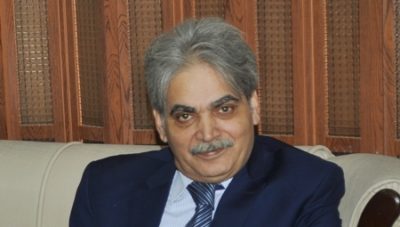
Pakistan has tremendous potential for export growth: Awais Saeed Piracha
LAHORE: The government should reduce duty and taxes on the import items, including tyres to curtail smuggling which is inflicting huge losses to the national kitty. Pakistan has tremendous potentials for exports but the current trend is not encouraging. It is essential to have an agricultural policy that increases the supply of raw material to agro-based industries.

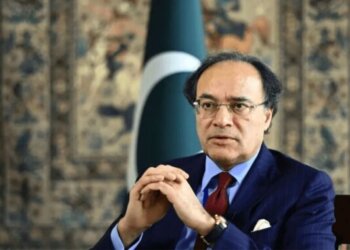
These views were expressed by Lahore Chamber of Commerce and Industry Executive Committee Member Awais Saeed Piracha while talking to Customs Today here the other day.
He said that the government and FBR should reduce customs duty and tax of the imported items so that elements involved in may be discouraged in order to boost legal trade which would be a win-win situation for both traders and the government.
The government currently has been facing huge losses due to the rising smuggling in the country and if the corrective measures are not taken the legal business will suffer significantly.
He also pointed out the harassment by the customs authorities in their way despite the fact that the containers are cleared yet they stop them and create harassment which is not only discouraging the businessmen but also posing losses to the national exchequer.
In answer to a question, Piracha said that Pakistan has tremendous potential for export growth but the current trend is not encouraging. The last time the exports showed a positive year-on-year growth was in June 2014.
Exports of food products dipped 3% and those of textile products fell 2%. Although raw cotton, cotton yarn and cotton cloth registered a decline in exports, there was an increase in shipments of knitwear, bed wear and readymade garments.
He said that there is a universally accepted methodology to analyze exports according to product classifications.
“Exports of every product classification within agricultural and industrial sectors posted a decline in value between calendar years 2015 and 2016, except for industrial consumer goods. Considering products that are frequently traded, a positive export growth was reported in textile products and mineral products, which are industrial consumer goods,” he said.
Similarly, positive growth was noted in exports of intermediate industrial goods such as chemical products and paper products, the LCCI EC member said, adding that although exports of industrial textile products to the EU increased across all three product classifications, exports of textile products to the US decreased across all three product classifications.
He added that an increase was reported in exports of agricultural consumer goods, industrial consumer goods in textile industry as well as in medical and surgical instruments to China. On the other hand, there was a significant decline in exports of intermediate goods in the textile industry to China.
He was of the view that Pakistan has an untapped export potential of $13 billion. There is great potential in home textile products, apparels, leather products and cereals such as rice. Furthermore, the potential in cement, instruments used in medical science, tubes of iron or steel and vegetable fats and oils, Piracha concluded.
He said that Pakistan is also said to have untapped potential in exports to important destinations such as the US, China, Germany, the UK, the United Arab Emirates, France, the Netherlands and Spain along with several other trading partners.
He suggested that to utilize the potential, the government needs to adopt a holistic approach aimed at developing both the agricultural and industrial sectors in order to increase exports.
It is essential to have an agricultural policy that increases the supply of raw material to agro-based industries. Furthermore, there is a need to diversify the range of value-added traditional industrial goods, such as consumer textile and leather products, as well as of non-traditional industrial goods.