You might also like


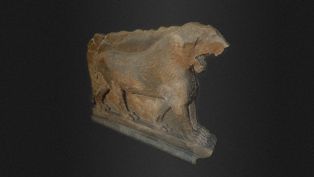
GIRGA: Digital representations may soon be all that is left of historic artifacts being destroyed by the Islamic State of Iraq and Syria (ISIS) and other related militant groups. However, 3D models of the these relics of the past may be better than losing all trace of their existence, one group of volunteers contends.
The remains of the Mosul Museum in Iraq were looted by members of ISIS in February 2015, as the group took control of the city. The facility had already been heavily damaged by the 2003 invasion of that nation, led by the United States.
Mesopotamia, an ancient land known as the cradle of civilization, once sat between the Tigris and Euphrates Rivers, in modern-day Iraq. Relics from that long-lost territory, as well as neighboring Assyria, were once held at the now-decimated museum.
Members of ISIS have also destroyed a series of other ancient relics around the nation, some of which date back to the dawn of the Common Era, 2,000 years ago. Project Mosul aims to preserve some of the ancient artifacts housed at the Mosul Museum in 3D graphics.
“Project Mosul aims to avoid the rhetoric of hate with which these acts of destruction have been associated and instead wants to focus on a message of hope: by working together, it is possible to preserve our shared memory and connections to our cultural heritage, even renew and invigorate it, regardless of the acts of destruction currently being perpetrated upon it,” Project Mosul leaders reported on its Web site.