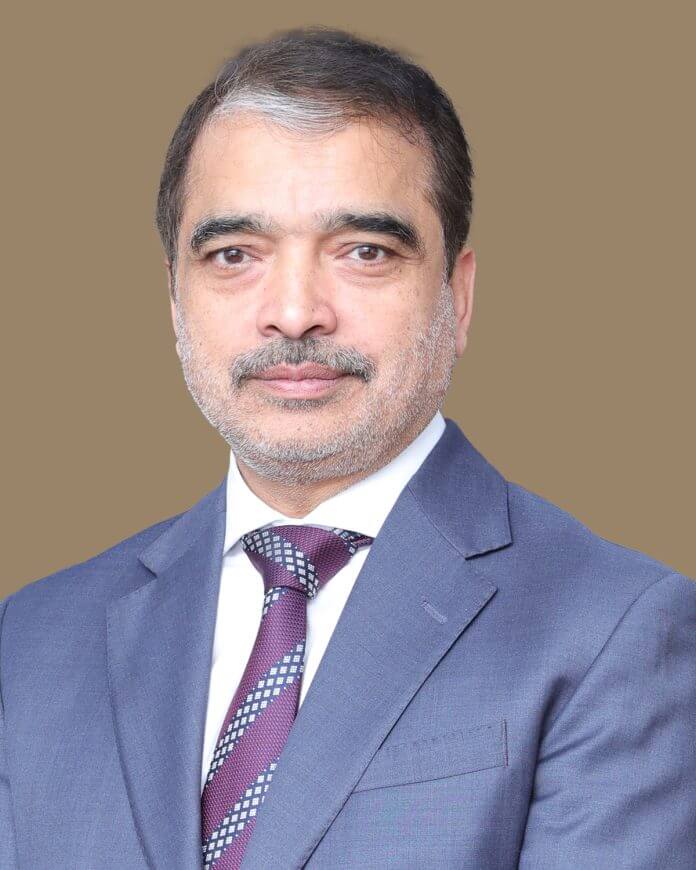
LAHORE: Lahore Chamber of Commerce and Industry (LCCI) President Faheemur Rehman Saigol called for a comprehensive, consultative and nationally harmonized approach to import tax exemptions, following the Federal Board of Revenue’s decision to allow tax-free import of over 2,400 Chinese goods through the Customs Dry Port Sost for exclusive consumption in Gilgit-Baltistan.
Commenting on the notification issued under S.R.O. 2488 (I)/2025, he acknowledged the government’s objective of facilitating economic activity and ensuring the uninterrupted supply of essential goods to Gilgit-Baltistan. He said that LCCI fully supports initiatives aimed at regional development, economic inclusion and improved livelihoods in underdeveloped areas. However, he stressed that such fiscal measures must be carefully structured to maintain a level playing field for businesses across Pakistan.


Saigol observed that Pakistan’s industrial and commercial sectors are currently operating under immense pressure due to high energy costs, increased cost of financing, elevated taxation and shrinking margins. In this context, selective tax exemptions on imports—particularly on a large number of tariff lines—could have spillover effects on domestic markets if not implemented with robust safeguards and prior stakeholder consultation.
The LCCI President emphasized that chambers of commerce, representing the country’s productive sectors, must be taken on board before finalizing such policy decisions. “Consultation is not only a democratic requirement but also a practical necessity to ensure policies achieve their intended objectives without harming domestic industry or distorting competition,” he said.
He noted that while the notification includes provisions such as quota limits, first-come-first-served authorization, domicile requirements and tracking through the Customs Computerized Clearance System, effective enforcement on ground remains critical. Any leakage of tax-free goods into markets outside Gilgit-Baltistan could severely impact local manufacturers and traders who are already burdened with full taxes and duties.
The LCCI President further stated that policy consistency and predictability are vital for business confidence. He urged that future decisions involving exemptions or special procedures should be aligned with a broader national trade, industry and import management policy. “If exemptions are deemed necessary for regional facilitation, parallel support measures must be introduced for domestic manufacturers, especially SMEs, to protect local production, employment and value addition,” he added.
He also highlighted that Pakistan’s long-term economic stability depends on strengthening domestic industry rather than increasing reliance on imports. “Our focus should be on reducing cost of doing business, rationalizing taxes and promoting local manufacturing, while ensuring that regional development initiatives do not inadvertently weaken the national industrial base,” he said.
Faheemur Rehman Saigol reiterated LCCI’s commitment to constructive engagement with the government and the Federal Board of Revenue. He expressed confidence that through structured dialogue and stakeholder participation, policies can be refined to serve both regional development goals and national economic interests. He concluded by urging the FBR to institutionalize regular consultations with chambers of commerce before issuing major tax or import-related notifications, stating that collaborative policy-making is the key to sustainable growth, investor confidence and economic resilience.