
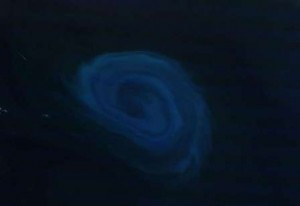


PARIS: Dead zones are occurring in bodies of water where oxygen has been reduced to the level where no life can survive anymore. There are some famous dead zones in the Gulf of Mexico and the Chesapeake Bay, but recently Canadian and German researchers have observed for the first time a dead zone right in the middle of the Atlantic Ocean.
Some of the dead zones, also called hypoxic areas, which were discovered in the Atlantic are more than 100 square miles. These regions seem to appear seasonally and are constantly shifting with ocean currents.
Dead zones came to be as a result of various cycles which are part of processes that exhaust large amounts of dissolved oxygen. Massive algae blooms are fueled by nutrients, which get into the system in most parts from agricultural sources. When microbial organisms eat up these algae, dissolved oxygen is also exhausted in the digestion process. As a result, large quantities of concentrated ocean water remain with very little or no oxygen for other forms of life in the area.
The dead zones discovered in the open Atlantic are different from the others observed. Usually, the shallow waters of bays and estuaries combined with their proximity to some industrial areas create the right conditions for a dead zone to exist. In the Atlantic, on the other hand, ocean currents converge to give shapes to massive rotating zones, quickly exhausting oxygen from the water found inside the massive vortex.

Karachi Port sets 138-year cargo handling record
KARACHI: Pakistan's maritime sector has achieved a major milestone as Karachi Port set a new record in its 138-year history...


