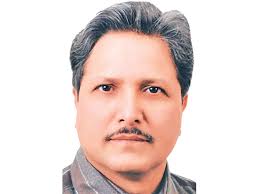
KATHMANDU: Minister for Agriculture Development Haribol Gajurel said on Sunday despite huge budget allocation for the sector, the country has been importing an increased quantity of agriculture products in recent years.
Nepal imported agro products worth Rs137.12 billion in 2014-15, setting off concern the country’s dependence on imported farm products has been ballooning out of control. In 2009-10, the imports stood at Rs44 billion.


“Despite the allocating of huge funds and increase in the inflow of foreign assistance, imports of food items are on the rise,” he said, speaking at a two-day conference on “Sustainable Agricultural Growth in Nepal: Challenges, Opportunities and Options” that kicked off here on Sunday.
The government, in the budget for the next fiscal year, has many incentives and policies to boost the sector. It aims at making the country self-reliant in egg, meat and dairy products within one, two and three years, respectively. The government has claimed the measures will help boost the gross domestic product by Rs30 billion.
Experts and economists have expressed concern about the growing dependence on foreign assistance for food imports, mainly after last year’s earthquakes. They stressed on the need for structural transformation, use of advance technology, demand-driven investment and organised farming system for the development of the farm sector.
Gajurel said donor-supported programmes are not demand-driven. “There is a need for appropriate government policies to coordinate donors-funded programmes in line with the actual need,” he said.
According to a report, the percentage of households relying on food assistance has jumped to 35 percent after the earthquakes compared to just 10 percent before.
The ministry had estimated a loss of Rs10.69 billion in the farm sector due the quake. This included loss worth Rs8.11 billion of the food stocked by farmers, Rs1.39 billion of the livestock industry, and Rs1.19 of damage to the infrastructure related to the sector.
Shenggen Fan, director general of International Food Policy Research Institute, highlighted the need for bringing the supply chain back on the track along with enhancing the capacity of farmers to ensure food security. “In addition, subsidies are needed mainly on agriculture-related infrastructure, including road, electricity, telecommunication and modern equipment,” he said.
Providing training to farmers on maintaining food reserves and utilising surplus production; enhancing the sector’s productivity amid increasing climate variation; consolidation of farmers in production and marketing of agro products; and maintaining a data base at the government-level to address demand-driven funding were some of the measures Fan suggested for the development of the sector.
Nepal has been undergoing transformation in the farm sector in recent days. The sector has been facing labour shortages, declining contribution of agriculture to the GDP amid an expanding services sector and an increasing number of farmers switching to cash crops from traditional farming.
Belay Mengistu, food and security leader at the US Agency for International Development, said there is a need for adequate investment from both private and the government sectors to benefit from the transformation of the farm sector.
Economist Bishwombhar Pyakurel said low productivity is a key challenge to ensuring benefits from the agricultural transformation.
“Stagnant productivity and increasing urbanisation have led to soaring food prices, which is the major hurdle to poverty alleviation,” he said.