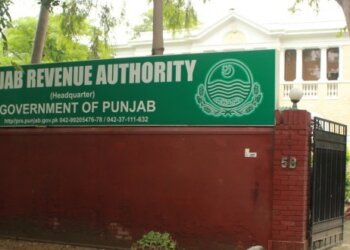
MULTAN: The Income Tax Ordinance, 2001, grants significant authority to tax officials, including those at the Regional Tax Office (RTO) Multan, to arrest individuals suspected of concealing income, especially in cases of substantial tax evasion.
According to Section 203B of the updated ordinance, tax officials can take action when evidence from audits reveals concealed income that leads to tax evasion of Rs100 million or more for filers and Rs. 25 million or more for non-filers.


However, before making an arrest, RTO Multan officials must obtain written approval from a high-powered committee, which includes the Minister for Finance and Revenue, the Chairman of the FBR, and the senior-most member of the Board, ensuring that these powers are exercised with due oversight and caution.
The ordinance also emphasizes transparency and accountability in the use of arrest powers. Sub-Section (2) mandates that all such actions must be overseen by the aforementioned committee, providing an additional layer of scrutiny.
This is particularly important in regions like South Punjab, where business activities are diverse, and where tax evasion can involve large sums, especially in sectors such as agriculture and manufacturing. Furthermore, Sub-Section (3) stipulates that any arrest made under these powers must adhere to the Code of Criminal Procedure, 1898, ensuring that the process is legally sound and respects the rights of individuals involved.
The ordinance also provides a mechanism for taxpayers to resolve disputes before legal action is taken. Sub-Section (4) allows the Chief Commissioner of RTO Multan, with prior approval from the FBR, to compound offences if the taxpayer agrees to pay the outstanding tax, along with applicable surcharges and penalties. This provision offers taxpayers an opportunity to settle matters amicably and avoid the long and costly process of legal proceedings.
For corporate offenders, Sub-Section (5) holds company directors and officers personally accountable for income concealment or related offences, ensuring that individuals at the top level of a business can be held liable. While such arrests do not absolve the company of its financial obligations, they serve as a strong deterrent against corporate tax evasion. This is particularly relevant for businesses in the industrial hubs of South Punjab, where large-scale operations can often result in significant financial discrepancies.
With these enhanced enforcement measures, RTO Multan is empowered to take a more active role in ensuring tax compliance. The measures not only aim to address tax evasion but also to foster a culture of compliance among businesses and individuals in South Punjab.
This is in line with the government’s broader objective of improving tax collection and financial transparency. For businesses operating within RTO Multan’s jurisdiction, adhering to tax obligations is crucial to avoid the risk of punitive action under these provisions.