Customs Today
  • Home
  • Islamabad
  • Karachi
  • Lahore
  • National
  • Transfers and Postings
  • Chambers & Associations
  • Business
No Result
View All Result
Customs Today
  • Home
  • Islamabad
  • Karachi
  • Lahore
  • National
  • Transfers and Postings
  • Chambers & Associations
  • Business
No Result
View All Result
Customs Today
No Result
View All Result
Home Science & Technology Science

NASA study reveals carbon content of temperate forests overestimated

bySana Anwar
27/11/2015
in Science, Science & Technology
Share on FacebookShare on Twitter

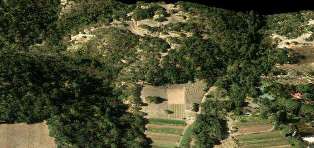
CANADA: A new study conducted by NASA revealed that previous measurements of the carbon content of millions of trees which are found in temperate United States forests were most likely to have been overestimated.

Trees can absorb and store carbon for a long time, but how much carbon is deposited in global forests is still unknown, researchers said.


You might also like

Tesla driverless system to use updated radar technology

12/09/2016

Apple to develop its own self-driving technology

10/09/2016

Laura Duncanson of NASA’s Goddard Space Flight Center explained that the estimations of living trees’ carbon content rely on a method based on cutting down trees, but it would take a lot of effort to do so, especially cutting down the biggest ones. She said the method is not practical to apply in large quantities.

Most field studies aim to just strategically sample trees because of the limitation. With U.S. forests, an average of about 30 trees per species would be taken down and measured. Experts would use mathematical models to extend those measurements to many thousands and millions of trees. This would result to an estimation of the amount of carbon stored or biomass for an entire forest.

Duncanson and her colleagues discovered that the method tends to miscalculate the height of large trees, and this leads to biomass estimations that are much too high for temperate forests.

Researchers said that the overestimation happens because of a sampling bias. Younger and smaller trees get chosen for analysis than older and larger ones. Mathematical models that estimate biomass are mostly based on smaller trees, and in turn, inaccurate models of the largest trees are created.

The new NASA study used lidar-based technique instead of the widely-common method. The technique could enable scientists to analyze whole swaths of forests from high above. Data for the study was provided by G-LiHT or Goddard’s Lidar, Hyperspectral and Thermal instrument.


Related Stories

Tesla driverless system to use updated radar technology

byCT Report
12/09/2016

WASHINGTON: Electric carmaker Tesla announced Sunday it was upgrading its Autopilot software to use more advanced radar technology. In a...

Apple to develop its own self-driving technology

byCT Report
10/09/2016

SAN FRANCISCO: Apple may not become an automaker, but it still wants to develop its own self-driving technology. The iPhone-maker's...

NASA spots slowest known magnetar

byCT Report
10/09/2016

WASHINGTON: Astronomers have found evidence of a magnetar - magnetised neutron star - that spins much slower than the slowest...

‘YouTubers’ outshining old-school television

byCT Report
09/08/2016

SAN FRANCISCO: A media revolution is taking place, and most people over 35 years of age aren’t tuned in. Millennial...

Next Post

Tokyo stocks open 0.25pc higher, Nikkei 225 adds 49.64pt

  • Terms and Conditions
  • Disclaimer

© 2011 Customs Today -World's first newspaper on customs. Customs Today.

No Result
View All Result
  • Transfers and Postings
  • Latest News
  • Karachi
  • Islamabad
  • Lahore
  • National
  • Chambers & Associations
  • Business
  • About Us

© 2011 Customs Today -World's first newspaper on customs. Customs Today.