NEW YORK: Transparency Market Research has released a new market report titled “U.S. On-Site Hydrogen Generator Market, by Category [Alkaline and Non-Alkaline (Proton Exchange Membrane)] and by Flow Rate (<100Nm3/h, 100-2,000Nm3/h, and >2,000Nm3/h) – U.S. Industry Analysis, Size, Share, Growth, Trends and Forecast, 2015-2023.” According to this report, the U.S. on-site hydrogen generator market was valued at US$99 million in 2014 and is projected to reach US$154 million by 2023 at a CAGR of 5.0% from 2015 to 2023.
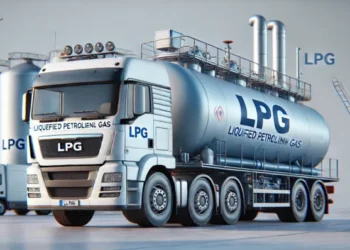
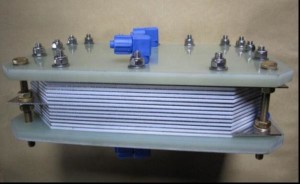
On-site hydrogen generators utilize platinum catalyst and proton exchange membrane (PEM) technology to fragment deionized water into its constituent parts. Hydrogen is generated at 13.8 bar/200 psi pressure without a compressor and with a purity of 99.9995% constantly and without operator intervention. On-site hydrogen generators provide reliable and low-cost hydrogen and increase security and safety by eliminating cylinder handling, hydrogen storage, and routine hydrogen delivery. Steam reforming, cracking, gasification, and electrolysis are some of the major technologies used to produce hydrogen. Additionally, steam reforming is one of the most dominant technology employed in large-scale hydrogen production using natural gas, naphtha, kerosene, or LPG as a feedstock.

Steam methane reforming is the most economical way to produce hydrogen. It involves two primary reactions: the reforming reaction and the water gas shift reaction. In the reforming reaction, natural gas is mixed with steam and is heated at very high temperatures to produce carbon monoxide and hydrogen. In order to produce additional hydrogen, carbon monoxide from the reforming reaction interacts with steam in the water gas shift reactor. Commonly utilized feedstocks in steam reformers are natural gas and naphtha. Steam reformers are segmented based on the type such as pre-reformers, primary reformers, compact reformers, and secondary reformers.
Hydrogen is used in a large number of applications ranging from petroleum recovery, chemical processing, and refining to fuel cells and metal production. However, petroleum recovery and ammonia production are the major markets for hydrogen. The global transportation industry is growing at a high rate and is considered to be one of the most attractive markets for hydrogen in the future. Category and flow rate segments are likely to be the major markets for on-site hydrogen generators in the near future. Increasing application of fuel cells is likely to stimulate the market demand for on-site hydrogen generators during the forecast period. The industry trend is likely to show preference toward smaller sized hydrogen generators in the future. However, majority of such hydrogen generators are still in the development and prototyping phase.
With the increasing number of refineries and petrochemical complexes coming up in the U.S., the on-site hydrogen generator market is likely to grow at a high rate in the future. Large populations in the U.S. also significantly boost the demand for hydrogen in ammonia production capacities, further increasing the demand for on-site hydrogen generators.
The on-site hydrogen generator market has been segmented on the basis of category and flow rate. In 2014, 100-2,000Nm3/h flow rate segment accounted for nearly 44% of the overall market share in the U.S. Additionally, flow rate segments lesser than 100Nm3/h and greater than 2,000Nm3/h occupied the market shares of nearly 32% and 24%, respectively, in the same year. On-site hydrogen generators with a flow rate of <100Nm3/h are high in demand due to their compactness and efficient operation. Considering the fact that the on-site hydrogen generators ranging 100-2,000Nm3/h are used mostly in all types of industrial applications, demand for these generators is anticipated to be high during the forecast period.