ISLAMABAD: The Asia Pacific Group (APG) on Money Laundering has urged Pakistan to enact appropriate laws, enabling local officials to act upon requests of foreign countries to freeze illegal assets and making terrorism financing and money laundering extraditable offences.
Pointing out deficiencies in Pakistan’s legal framework, the visiting APG team pointed out that this could hamper Pakistan’s effective response on requests of mutual legal assistance by foreign countries in money laundering cases, officials said.


Stressing the need for strengthening domestic legal framework by October, members of the APG team an on-site inspection would be carried out by the regional body after this period.
It also urged the authorities concerned to give predicate offence monitoring powers to the Securities and Exchange Commission of Pakistan (SECP) and National Accountability Bureau (NAB).
The group’s other areas of concerns were activities by non-profit organizations, narcotics trafficking and proceeds of crimes.
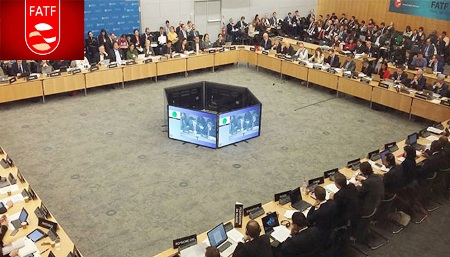
The APG team is visiting Islamabad to assess legal and administrative arrangements for implementing the Financial Action Task Force (FATF) recommendations for curbing money laundering and terrorism financing.
The team comprises officials from the United States, Turkey, China and the United Kingdom.
Officials from the US Treasury and UK’s New Scotland Yard are part of the delegation.
Discussions are taking place on technical grounds where Pakistani authorities are trying to address the APG’s concerns.
During its third day of visit, the AGP team discussed the status of implementation of the FATF recommendations on supervision of financial institutions, challenges posed by beneficial ownerships and trusts, the targeted financial sanctions against terrorism and proliferation of weapons of mass destruction and mutual legal assistance and extradition.
After discussions, the AGP will prepare the second draft of technical compliance report before October, which can be improved upon during the mutual evaluation on-site visit, scheduled for October.
The FATF has already placed Pakistan on grey list and the APG’s Mutual Evaluation report can play a critical role in retaining or removing the country from the list after September next year.
Pakistani authorities were of the view that each department had its own mutual legal assistance arrangement, which could meet the needs of other countries. However, they said that this did not fully persuade the APG team.
Pakistan is also not a signatory to mutual legal assistance treaties with countries such as the US, the UK, Canada, the United Arab Emirates, Malaysia and Thailand.
Officials said that the APG team also expressed concerns about implementing recommendations on extradition of criminals involved in money laundering and terrorism financing.
The FATF makes it mandatory for member countries to deny safe havens to individuals charged with financing of terrorism, terrorist acts or terrorist organisations.
Various departments gave presentations to the APG on their role in curbing money laundering and terrorism financing.
The visiting experts were largely satisfied with the performance of Anti Narcotics Force, SECP and NAB. But they sought improvements in the skill sets of the Financial Monitoring Unit and National Counter Terrorism Authority (NACTA).
Discussions were also held on effective supervision of financial institutions to ensure that the secrecy laws did not hamper implementation of the FATF recommendations.
The visiting experts also stressed that beneficial ownerships should not be used to protect the proceeds of crimes.
They also discussed Pakistan’s legal and regulatory regimes on beneficial ownerships and trusts, which could be used for laundering money.