ISLAMABAD: Pakistan plans to install new gas import terminals and pipelines to underpin an economic revival linked to $46 billion in Chinese deals, but its ambitions are being undermined by poor planning, price uncertainty and security concerns, industry experts said. The government wants to increase imports to fuel industry expansion and reduce daily blackouts. It also aims to boost domestic gas production in the long term. For that to happen, energy executives said the government must regulate the sector better, be more consistent in dealing with foreign firms and forge ahead with tapping big deposits in the province of Balochistan, where separatists regularly clash with government forces.
“The security situation should not deter exploration; it doesn’t anywhere else,” said Shahid Sattar, a former member of the government’s Planning Commission. “But the government has a history of reneging on signed contracts, which creates uncertainty.” Pakistan’s 180 million citizens badly need more gas. It accounts for about half of the country’s energy requirements and can fuel four out of every five cars. Pakistan has shale gas reserves of 105 trillion cubic feet, the US Energy Information Administration estimates, enough for around 50 years of supplies at the current rate of consumption.


Yet Pakistan only generates about four billion cubic feet of gas a day, less than two-thirds of its needs. Power cuts often last at least eight hours a day. In the winter there is sometimes not enough gas to heat homes or cook. Filling stations frequently close. Changing that will take time. A spokesman for the ministry of water and power said the government was reviewing 225 energy concessions to “incentivise owners and shareholders for production.”
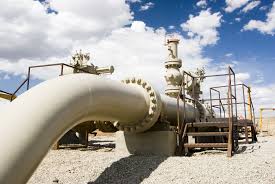
Gas-rich Pakistan is not as attractive to investors as oil-rich countries, since oil can more easily be taken to market. For now, the government envisages imports as its main new source of supply. Pakistan’s first liquefied natural gas (LNG) terminal, finished on time and on budget, began receiving shipments last month. The government plans to construct two more and connect them to pipelines to be built by state-owned Russian and Chinese companies. “This expansion will have a huge impact,” said Mobin Saulat, head of state-run Inter State Gas systems, which oversees the pipelines. “We are looking at roughly enough gas supply to take care of the existing shortfall.”
Pakistan hopes to expand one of the pipelines to link up with Iran’s rich, underdeveloped gas fields if US sanctions designed to check Iran’s nuclear program are lifted. Already, though, the first import terminal faces problems. The channel leading from the sea is too shallow, and needs dredging before big LNG tankers can enter. Until the dredging is done, and the row over who pays for it settled, Pakistan cannot sign an import deal with Qatar gas. Analysts say now is a good time to commit to a long-term agreement as prices have plunged. Desperate for gas, private businessmen funded Pakistan’s first small shipment of LNG, but there is no mechanism for them to sell the gas onto the domestic market.