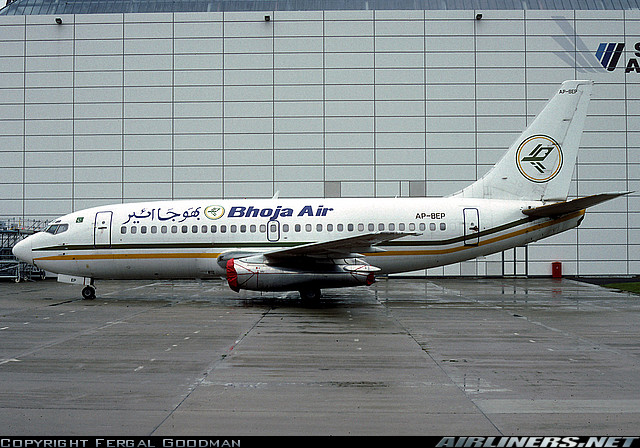
A newly released report reveals that the ineffective automated flight deck management in extreme adverse weather conditions by cockpit crew caused the crash of Bhoja B732 at Islamabad on Apr 20th 2012.
The report was released by Pakistan’s CAA. The ineffective automated flight deck management was due to various factors including; incorrect selection of cockpit crew on account of their inadequate flying experience, training and competence level for Boeing 737-236A (advanced version of Boeing 737-200 series), absence of formal simulator training in respect of FO for handling an automated flight deck, non-existence of cockpit crew professional competence / skill level monitoring system at operator level.


The cockpit crew incorrect decision to continue the flight for destination and non- adherence to Boeing recommended QRH and FCOM remedial actions / procedures due to non-availability of customized aircraft documents (at Bhoja Air) for Boeing 737-236A (advanced version of Boeing 737-200 series) contributed towards the causation of accident. The inability of CAA Pakistan to ensure automated flight deck variance type training and monitoring requirements primarily due to incorrect information provided by the Bhoja Air Management was also a contributory factor in causation of the accident.
The captain (58, ATPL, 10,158 hours total, 2,027 hours on type, 82 hours on -236A subtype) was pilot flying, the first officer (54, CPL, 2,832 hours total, 750 hours on type, 82 hours on subtype -236A) was pilot monitoring, the CAA Pakistan reported. The first officer was due for his recurrent simulator training session, however requested and was granted additional two months to complete that training. His previous simulator training had been done on -200 subtypes without advanced automated cockpits.