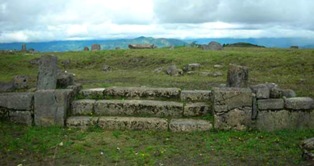


MALI: A tomb containing the remains of what are believed to be two priests has been excavated at a temple complex near the town of Pacopampa in Peru. The site dates back to the first millennium BCE, when the area was inhabited by the Pacopampa culture, a pre-Inca civilisation. This is the second tomb at the site that has been excavated, following the discovery of the Lady of Pacopampa in 2009. The two discoveries are significant in that they reveal evidence of a socially stratified society at a time that archaeological consensus considered egalitarian in the region.
The two bodies in the tomb were arranged in such a way that one faced north and the other south, both folded in a foetal position, Ancient Origins reports citing Peruvian media. Their skulls bore evidence of deformation, which was a sign of high status in ancient Andean cultures. In addition, the archaeologists working at the site found a necklace of 25 elaborate gold beads as well as a black ceramic vessel in the shape of a serpent with the head of a jaguar. This vessel’s shape inspired the name given by the researchers to the two skeletons: the Serpent Jaguar priests.
Besides the artefacts, the team also found traces of mineral pigments in front of one of the skulls. These included cinnabar, a red mineral, malachite, which is green, dark brown hematite, black magnetite, and white calcite. The lead researcher of the Archaeological Project of Pacopampa, Yuji Seki from the Ethnological Museum in Japan, told local media that the burial site was located right next to the east side of a square courtyard which was probably used for ceremonial gatherings. Based on this location, the artefacts found in the tomb and the shape of the skulls, it is reasonable to suggest that the individuals buried there may have directed these gatherings, which means they were probably priests.
The significance of the colour pigments has not been determined yet but there is reason to believe they were also an indication of high status, as they are similar to the pigments found in the tomb of the Lady of Pacopampa.

Karachi Port sets 138-year cargo handling record
KARACHI: Pakistan's maritime sector has achieved a major milestone as Karachi Port set a new record in its 138-year history...