ISLAMABAD: Three local oil refineries – Pakistan Refinery Limited (PRL), National Refinery Limited (NRL) and BYCO Petroleum Pakistan Limited – have raised their voices against the allegation of being responsible for producing a high level of carbon emission leveled by a member of the Energy Export Group of the Economic Advisory Council (EAC).


Responding to a letter from the DG Oil Petroleum Division dated October 13, 2021, heads of the refineries have contested against Farooq Rahmatullah’s letter against the three in separate letters of their own.
As per details, the EAC Energy Export Group member, in a letter dated September 15, had said that these refineries are obsolete and have a high level of carbon emission and therefore, should be shutdown.
Dispelling the allegation by Rahmatullah, PRL Managing Director (MD) and Chief Executive Officer (CEO), Zahid Mir, said that none of the refineries in Pakistan are outdated as they have been continuously upgrading by making substantial investment to comply with changes in product specification from time to time.
He said that PRL is fully compliant with the emission standards earlier set by the Sindh Environmental Protection Agency (SEPA) for refineries and there has never been a breach of these standards in the last many years, clearly showing PRL’s commitment towards environment and safe operations.
He further stressed that PRL has made significant investment of more than Rs17 billion over the last twenty years.
Mir opined that the letter by the EAC group’s member is “biased, and based on falsehood and misconceptions which do not serve our national interest, besides being an effort to mislead the government from policy making and therefore, does not deserve government’s consideration.”
“The letter only amplifies the perspective of oil traders, serving their interest and in no way has the long-term prosperity of the nation in mind as the local refineries are detrimental to their business,” Zahid Mir said.
Furthermore, the PRL head pointed out that it seemed strange that Rahmatullah, who was a director of PRL from 1999 to 2018, as well as chairman PRL board of directors (BoD) from 2005 to 2017, is now categorising PRL as an outdated refinery as it raised the question that why he did not upgrade or advocate shutting down the refinery during this tenure.
Similarly, NRL CEO Jamil Ahmed Khan, in a letter to the DG Oil Petroleum Division, said that NRL had been complying with government’s instructions for improvement in product specifications and also with applicable National Environmental Quality Standards (NEQS).
“The NRL is the only refinery of the country producing EURO V standard diesel and base oil for manufacturing lube oils; it is the only domestic source of Ultra Low Sulphur Diesel (ULSD) used by the Pakistan Navy and other modern military vehicles. It is the only lube base oil refinery of the country providing base stocks for lubricants/ greases/ waxes for sectors like automobile, textile, IPPs, marine and many other industries,” Jamil mentioned.
He added that all over the world, including ARAMCO and ADNOC, refineries are backed by large crude oil producing corporates or the governments. “Even in India, refineries underwent an exponential growth only after they were provided tariff protection by the Indian government.”
“We request that suggestions that are biased and based on inadequate knowledge should not be given any importance. Such efforts only spoil the environment of investment in refining industry, reduce value of invested capital and lead the country towards import reliance,” the NRL CEO said.
In the third letter, Byco Petroleum Pakistan Limited BoD Chairman, Mohammad Wasi Khan, said that the suggestion to close some of the refineries would be truly catastrophic in terms of foreign exchange loss and disruption of supply chain, and will also jeopardise the security of energy supplies to the nation and its defence forces.
“We not only reject the ideas circulated by Farooq Rahamatullah but in fact, request your office to provide maximum support to the refineries of Pakistan while presenting their case in front of the relevant forums, enabling all locally established refineries to successfully achieve upgradation targets and provide valuable contribution towards the betterment of the country,” Wasi Khan stressed.
It is pertinent to mention here that refineries in Pakistan are strategic assets, playing an important role in meeting the country’s refined products requirements, including defence requirements.
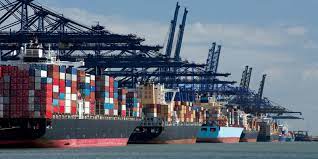
The suggestion of shutting down local refineries could cause constraints in the existing infrastructure at Kemari and Bin Qasim ports to handle limited products as well as having an adverse pressure on country’s already depleted foreign exchange reserves because of increased imports of refined petroleum products.
Any green filed deep conversion refinery will take a seven to eight years to come in to commercial production and the new refinery should have minimum 275,000 barrel per day (BPD) capacity which entails an investment of at least $8 billion without considering certain infrastructure cost like pipeline connectivity, port/jetty cost or cost of cost of Single Point Mooring (SPM) etc., which if included, could take the price tag to $10 billion.
Furthermore, pressure on the country’s oil supply chain due to closure of all three southern refineries will create problems for citizens, as well as creating logistic issues in product distribution across the country.
In addition, thousands associated directly or indirectly with these refineries would lose employment, especially talented and experienced people, which could lead to brain drain from the country as a result of shutting down of the three local refineries.
It may also be mentioned here that closure of the three refineries will encourage the imports of petroleum products, resulting in benefits to a very selected group.