DOHA: Qatar’s growth is forecast to average 5.1 percent during 2015-17, boosted by output against the gas sector and public investment. The latter will drive average non-hydrocarbon growth of 9.1 percent year-on-year during the period.
Despite lower oil prices, high public investment in the country’s development plan and gas output gains linked to the launch of the Barzan production facility should see Qatar’s economic performance remain relatively strong through 2016-17, NBK’s latest ‘Mena Economic Outlook’ noted.
Qatar’s real GDP is forecast to grow by 5.4 percent in 2016 and 5.1 percent in 2017, from an expected increase of 4.9 percent in 2015. This figure, while down from the 9.2 percent annual average witnessed during 2010-2014, still puts Qatar among the most dynamic economies in the GCC.
According to NBK’s research note, the non-hydrocarbon sector remains the main determinant of Qatar’s economic growth. Underpinned by government spending, output is forecast to expand by 9.1 percent year-on-year on average between 2015 and 2017. Financial services, construction and trade and hospitality will continue to drive Qatar’s non-hydrocarbon sector. Economic expansion also being propelled by burgeoning population growth of 8.8 percent year-on-year, which is helping to boost domestic consumption.
However, the country’s headline inflation is projected to rise gradually over the next two years, from an expected 1.7 percent in 2015 to 3.0 percent in 2017. Rising rental costs and slowly rebounding global food and commodity prices are likely to be the predominant inflationary impulses. While rental inflation slowed to 1.8 percent year-on-year in October, rapid population growth owing to the influx of expatriate workers is expected to continue exerting pressure on the country’s limited residential housing stock. The price of land and buildings, as measured by the real estate price index (REPI), was up 18.2 percent y-o-y last September, although it has been moderating over the last year. A strengthening US dollar to which Qatari riyal is pegged has helped restrain imported inflation.
On the fiscal side, the report noted, future spending is likely to be rationlised in Qatar. While current spending will be restrained, capital spending will need to rise as the authorities make up for previous below-budget outlays, due to delays and capacity constraints, and push ahead with implementing their development plan ahead of the World Cup in 2022. Non-essential projects will be scaled back.
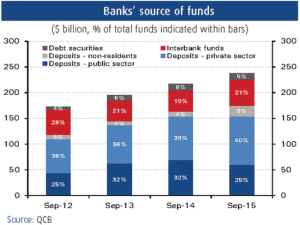
Qatar’s banking sector has begun to feel the effects of low oil prices. Credit growth has been moderating over the last year owing to a slowdown and contraction in public sector owing to a slowdown and contraction in public sector borrowing.
In contrast, credit growth to the private sector has averaged 22.0 percent y-o-y for most of the year compared to 15.6 percent in 2014, as banks continue expanding credit lines to the real estate, industrial and retail sectors of the economy. Foreign lending has also proceeded apace, with growth averaging 45.2 percent y-o-y in 2015. In view of the government’s commitment to continue spending on infrastructure and expand private sector participation in the development plan, the outlook for credit growth remains positive.