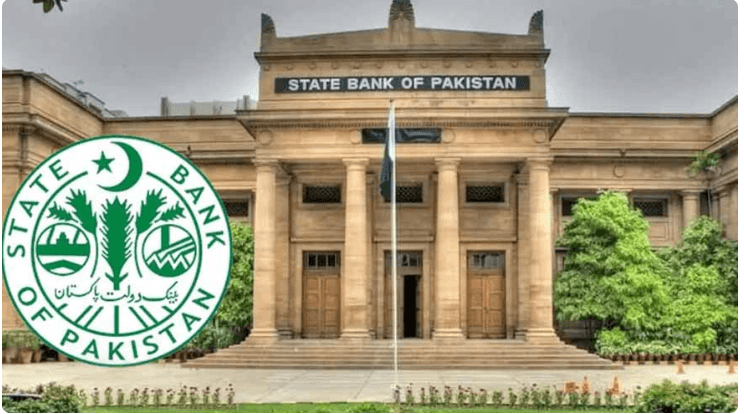
KARACHI: The State Bank of Pakistan on Wednesday confirmed it had received around $1.3 billion from the International Monetary Fund following the completion of the latest review of Pakistan’s economic reform programme.
In a statement shared on X, the central bank said the IMF Executive Board, during its May 8 meeting, approved the release of SDR 760 million under the Extended Fund Facility (EFF) along with a second tranche of SDR 154 million under the Resilience and Sustainability Facility (RSF).


According to the SBP, the total amount received stands at SDR 914 million, equivalent to nearly $1.3 billion, which was transferred on May 12.
The central bank added that the inflow would be reflected in Pakistan’s foreign exchange reserves for the week ending May 15.
Last week, the IMF approved the third review of Pakistan’s reform agenda, clearing the way for the latest disbursement. The release includes approximately $1.1 billion under the EFF and nearly $220 million through the RSF, taking the total amount disbursed under both programmes to around $4.8 billion.
While acknowledging Pakistan’s improving economic indicators, the IMF warned that the country remained vulnerable to external risks, particularly due to instability linked to the ongoing conflict in the Middle East.
“The authorities’ strong implementation, despite the Middle East war, has maintained economic stability and improved financing and external conditions,” the Fund said in its statement.
However, the IMF stressed the importance of maintaining prudent economic policies and accelerating structural reforms to strengthen resilience and ensure sustainable long-term growth.
IMF Deputy Managing Director Nigel Clarke also highlighted growing global uncertainty, saying Pakistan needed to continue disciplined macroeconomic management while speeding up reform efforts to counter future economic shocks.
Separately, the SBP in its half-year economic report released on Tuesday noted that although macroeconomic stability improved during the first half of fiscal year 2026, tensions in the Middle East continued to pose risks to inflation, trade, remittances and overall economic activity.