Customs Today
  • Home
  • Islamabad
  • Karachi
  • Lahore
  • National
  • Transfers and Postings
  • Chambers & Associations
  • Business
No Result
View All Result
Customs Today
  • Home
  • Islamabad
  • Karachi
  • Lahore
  • National
  • Transfers and Postings
  • Chambers & Associations
  • Business
No Result
View All Result
Customs Today
No Result
View All Result
Home Science & Technology Science

Scientists use laser to cool liquid things

bySana Anwar
17/11/2015
in Science, Science & Technology
Share on FacebookShare on Twitter

EUROPE: Whether it’s James Bond strapped to a table, Han Solo being cornered by Greedo in the Mos Eisley Cantina, or any other movie scene where lasers are being used as a weapon, the implication is that they do their damage by focusing intense heat on their target.

And so it was in the real world (albeit with less melodrama). Until now, that is. For the first time, scientists have used a laser to cool things down, by figuring out how to make a laser refrigerate water and other types of liquid.


You might also like

Tesla driverless system to use updated radar technology

12/09/2016

Apple to develop its own self-driving technology

10/09/2016

“Typically, when you go to the movies and see Star Wars laser blasters, they heat things up. This is the first example of a laser beam that will refrigerate liquids like water under everyday conditions,” said Peter Pauzauskie, a researcher in materials science and engineering at the University of Washington. “It was really an open question as to whether this could be done because normally water warms when illuminated.”

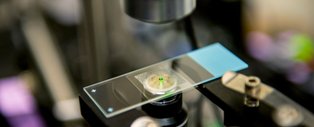
Pauzauskie and his team used an infrared laser to cool water by about 2.2 degrees Celsius (36 degrees Fahrenheit). Not a huge temperature change by any means, but in light of the fact that it’s never been done before, it’s a major achievement.

Describing their method in the journal PNAS, the team says they effectively ran a laser in reverse, illuminating a microscopic crystal suspended in water so that it glowed with slightly more energy than the amount of light absorbed.


Related Stories

Tesla driverless system to use updated radar technology

byCT Report
12/09/2016

WASHINGTON: Electric carmaker Tesla announced Sunday it was upgrading its Autopilot software to use more advanced radar technology. In a...

Apple to develop its own self-driving technology

byCT Report
10/09/2016

SAN FRANCISCO: Apple may not become an automaker, but it still wants to develop its own self-driving technology. The iPhone-maker's...

NASA spots slowest known magnetar

byCT Report
10/09/2016

WASHINGTON: Astronomers have found evidence of a magnetar - magnetised neutron star - that spins much slower than the slowest...

‘YouTubers’ outshining old-school television

byCT Report
09/08/2016

SAN FRANCISCO: A media revolution is taking place, and most people over 35 years of age aren’t tuned in. Millennial...

Next Post

Quantum computer coding in silicon now possible

  • Terms and Conditions
  • Disclaimer

© 2011 Customs Today -World's first newspaper on customs. Customs Today.

No Result
View All Result
  • Transfers and Postings
  • Latest News
  • Karachi
  • Islamabad
  • Lahore
  • National
  • Chambers & Associations
  • Business
  • About Us

© 2011 Customs Today -World's first newspaper on customs. Customs Today.