

Customs Today
  • Home
  • Islamabad
  • Karachi
  • Lahore
  • National
  • Transfers and Postings
  • Chambers & Associations
  • Business
No Result
View All Result
Customs Today
  • Home
  • Islamabad
  • Karachi
  • Lahore
  • National
  • Transfers and Postings
  • Chambers & Associations
  • Business
No Result
View All Result
Customs Today
No Result
View All Result
Home Science & Technology Science

Secrets of ‘dark universe’ may soon be resolved

byCustoms Today Report
02/06/2015
in Science, Science & Technology
Share on FacebookShare on Twitter

You might also like

Tesla driverless system to use updated radar technology

12/09/2016

Apple to develop its own self-driving technology

10/09/2016

LONDON: The Large Synoptic Survey Telescope (LSST), whose construction officially began at a traditional stone-laying ceremony outside La Serena, Chile on April 14th, is slated to start scanning the heavens in 2022.
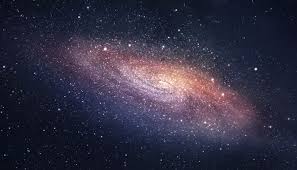
When it does, this ambitious international astrophysics project should open up the “dark universe” of dark matter and dark energy, the unseen substance and force, respectively, composing 95 percent of the universe’s mass and energy, as never before.
The Director of LSST, Steven Kahn of Stanford University said that in terms of how much light it will collect and its field of view, LSST is about ten times bigger than any other survey telescope either planned or existing.
LSST will feature an 8.4-meter diameter mirror and a 3.2 gigapixel camera, the biggest digital camera ever built. Every few days, the telescope will survey the entire Southern Hemisphere’s sky, hauling in 30 terabytes of data nightly. After just its first month of operations, LSST’s camera will have observed more of the universe than all previous astronomical surveys combined.
This capability to rake in data, extended over a ten-year observing run, will yield a staggering amount of astronomical information. The telescope should observe some 20 billion galaxies and many tens of thousands of supernovae. In addition, LSST will help map the stars composing the Milky Way and spy reams of asteroids passing near Earth.

Related Stories

Tesla driverless system to use updated radar technology

byCT Report
12/09/2016

WASHINGTON: Electric carmaker Tesla announced Sunday it was upgrading its Autopilot software to use more advanced radar technology. In a...

Apple to develop its own self-driving technology

byCT Report
10/09/2016

SAN FRANCISCO: Apple may not become an automaker, but it still wants to develop its own self-driving technology. The iPhone-maker's...

NASA spots slowest known magnetar

byCT Report
10/09/2016

WASHINGTON: Astronomers have found evidence of a magnetar - magnetised neutron star - that spins much slower than the slowest...

‘YouTubers’ outshining old-school television

byCT Report
09/08/2016

SAN FRANCISCO: A media revolution is taking place, and most people over 35 years of age aren’t tuned in. Millennial...

Next Post

Scientists restore lost memory in mice, shedding light on amnesia

  • Terms and Conditions
  • Disclaimer

© 2011 Customs Today -World's first newspaper on customs. Customs Today.

No Result
View All Result
  • Transfers and Postings
  • Latest News
  • Karachi
  • Islamabad
  • Lahore
  • National
  • Chambers & Associations
  • Business
  • About Us

© 2011 Customs Today -World's first newspaper on customs. Customs Today.