SINGAPORE: For decades, Singapore has walked a careful line between the U.S. and China. Now, the tiny Southeast Asian state is finding itself in Beijing’s cross hairs.
China has gone public in recent months to chastise Singapore for a perceived alignment with the U.S. against China’s actions in the disputed South China Sea. For Singapore, which the American Navy uses as a launch point for patrols of the strategic Strait of Malacca, the tensions cast doubt on its long-cherished ability to steer clear of political spats and focus on trade and investment.


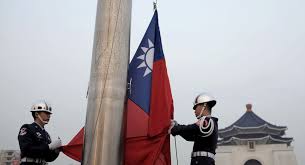
The latest episode has the added wrinkle of Taiwan, which China considers its territory. Nine Singaporean armored personnel carriers were seized by Hong Kong customs last week, with the vehicles en route from Taiwan on a commercial ship after being used in training exercises. Singapore army chief Major General Melvyn Ong said the military was still seeking to ascertain the exact reason the vehicles were impounded.
While Ong said Hong Kong was a common port of call for foreign militaries and noted “there have been no issues in the past,” the shipment elicited a formal protest from Beijing, which warned Singapore to abide by Hong Kong law and the One-China principle that China uses to guide its affairs with Taiwan.
“This is not the first time Singapore ships equipment from Taiwan through Hong Kong,” said Bilahari Kausikan, an ambassador-at-large for Singapore. The fact this particular consignment was picked up shows China wants to “send a signal not only to us, but to all” Southeast Asian nations. China’s long-term strategy is to turn Singapore into an ally and “mouthpiece” for its positions, he said.
China might be seeking to gain the advantage ahead of Donald Trump’s January inauguration as U.S. president — and amid questions about the future of President Barack Obama’s military and economic “pivot” to Asia — by prodding countries like Singapore to stay out of political disputes like the South China Sea.
The spat highlights the difficulty for smaller Asian nations amid the broader tussle for regional influence between China and the U.S. Singaporean Prime Minister Lee Hsien Loong has warned several times that the region’s nations don’t want to take sides. While countries are building economic links with China, some have also sought the buffer of strategic relations with America.