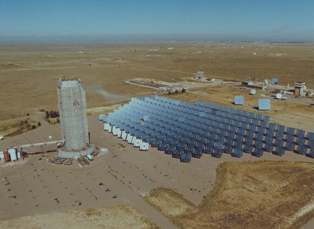
LONDON: Environmentalists are concerned with the fact that solar energy sites across California are built mostly on undeveloped land causing great harm to natural landscapes. The latest study by researchers at the Carnegie Institution of Science, 85% of solar sites are built on undeveloped natural landscapes with 28% of solar plants on pastures or cropland. The study suggests that solar energy sites are harming animal habitats, wildlife and farms across California.
Rebecca Hernandez, lead author of the study, said it is surprising to know that very few solar energy sites are placed in the built environment, close to where energy is consumed. California is considered as the second-largest solar state with the highest position titled to the Golden State having 11 times more installed solar energy capacity than North Carolina.


Though 33% of power in California is supplied through solar energy, it is causing great harm to California’s unique landscape and wildlife. “Instead, we see that ‘big solar’ is competing for space with natural areas. Knowing this is vital for understanding and creating predictions of a rapidly changing global energy landscape”. Solar energy in developed areas would have great environmental co-benefits, said Hernandez.
The site for solar energy plant is selected on various factors like access to transmission lines, land availability, community support and permitting laws. Despite of these factors, Hernandez found 19% of solar sites were built far away from transmission lines stressing poor planning and execution by the California government. The study found majority of solar sites in California’s Central Valley, Imperial Valley and the Mojave Desert.